
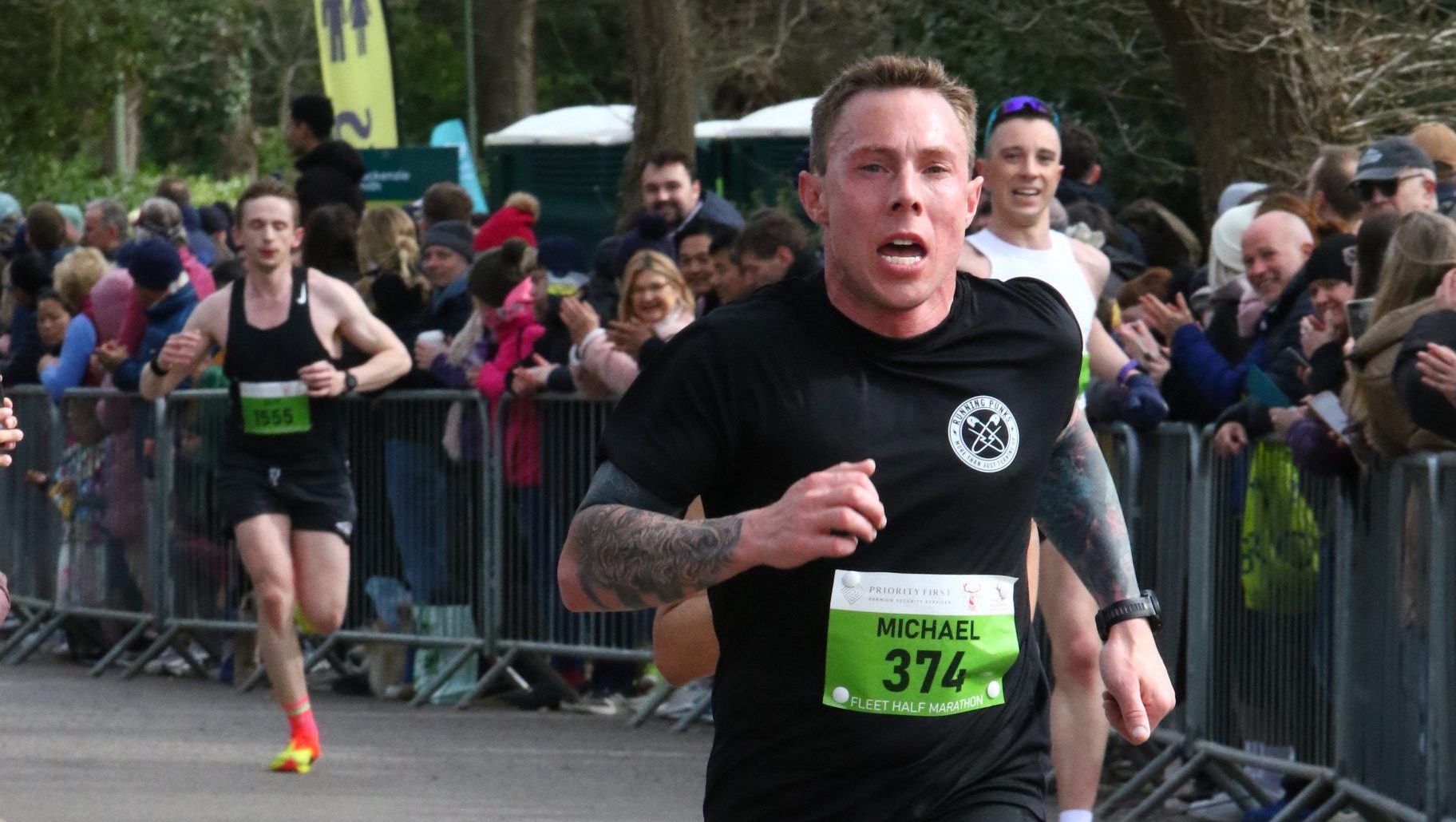
Mike Akers headed up north hoping that his legs would hold up okay when he took on the Manchester Marathon
There are marathon days when everything clicks—and then there are days like this.
Representing Bournemouth AC at the Manchester Marathon, Adam Corbin and Mike Akers arrived on the start line with every reason to feel optimistic. Training in the bank, confidence high, and recent form suggesting both were knocking firmly on the door of sub-2:40 performances.
Just three weeks earlier at the Fleet Half Marathon, both had delivered excellent runs. Adam was particularly outstanding, clocking a superb PB of 1:15—clear evidence he was in the shape of his life. Mike followed up with a strong 1:20:51, a time that confirmed he too was in excellent condition and not far removed from sub-2:50 territory.
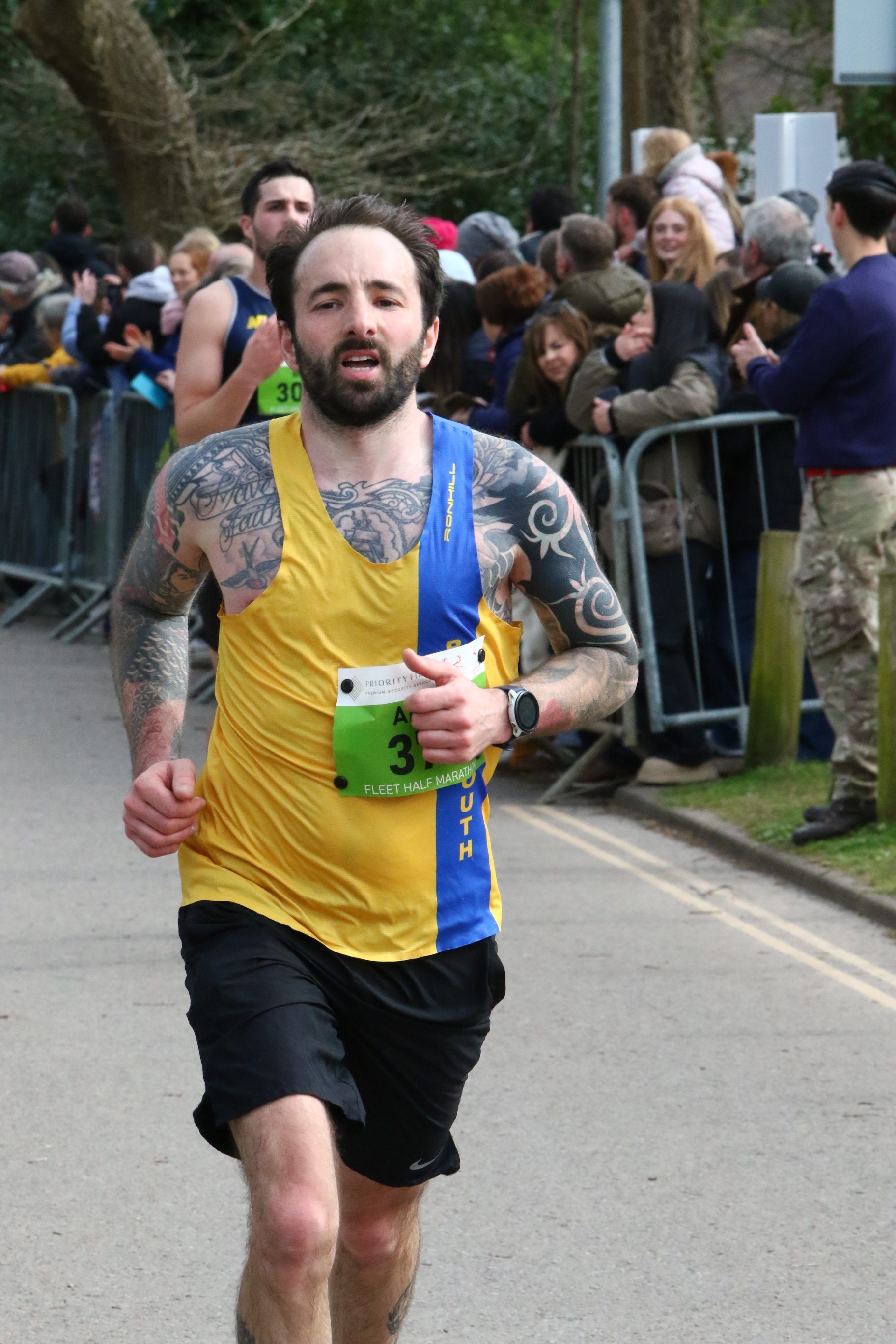
Adam Corbin had been feeling a little under the weather in the lead up to the race
But as is so often the case with the marathon, the story began to unravel in the weeks that followed.
Mike’s troubles started first, with an issue in his left glute and hip that then developed into a calf problem—never ideal in the final phase of marathon preparation. Adam’s setback came in the form of illness, a heavy cold that severely disrupted his training. In fact, he managed just one meaningful run in the entire week before race week. Far from ideal, and certainly not the preparation his Fleet performance had deserved.
By the time race weekend arrived, Adam was still under the weather and, by his own admission, not especially motivated to race. Were it not for Mike making the trip, he may well have withdrawn. But the pair travelled north together and took their place on the start line, determined to give it a go.
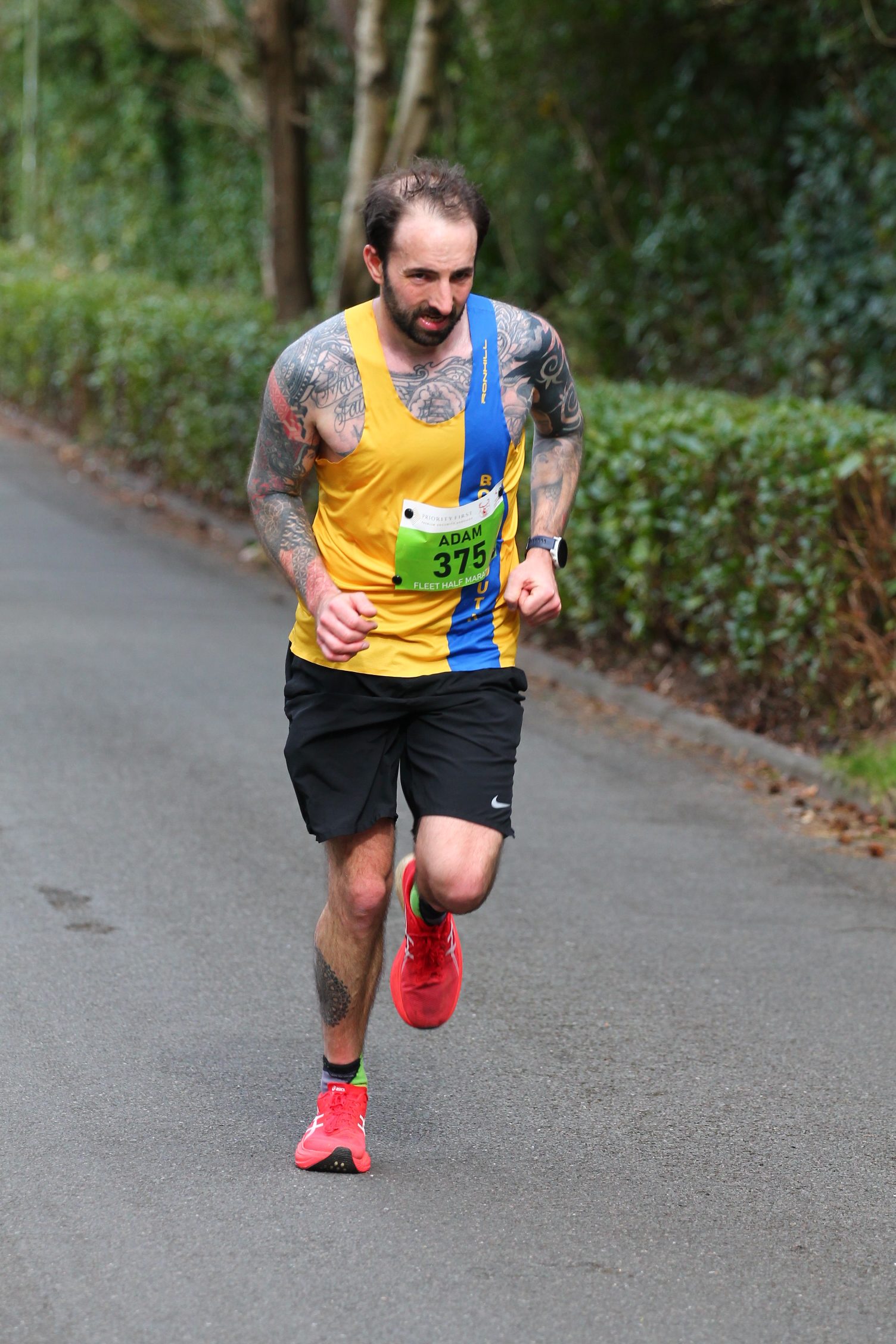
Adam knew he’d be hard pushed to make it all the way round feeling like he did
Adam set off at a steady 6:24 per mile pace, holding that rhythm through the first 10km. He then eased slightly to 6:30 pace for the next few miles before slipping to around 6:40 pace over the following five. As the miles ticked by and the effort began to bite, it became increasingly clear that the illness had taken more out of him than hoped. After a couple more miles at around 6:50 pace, Adam made the sensible but difficult decision to call it a day rather than endure another ten miles in a depleted state.
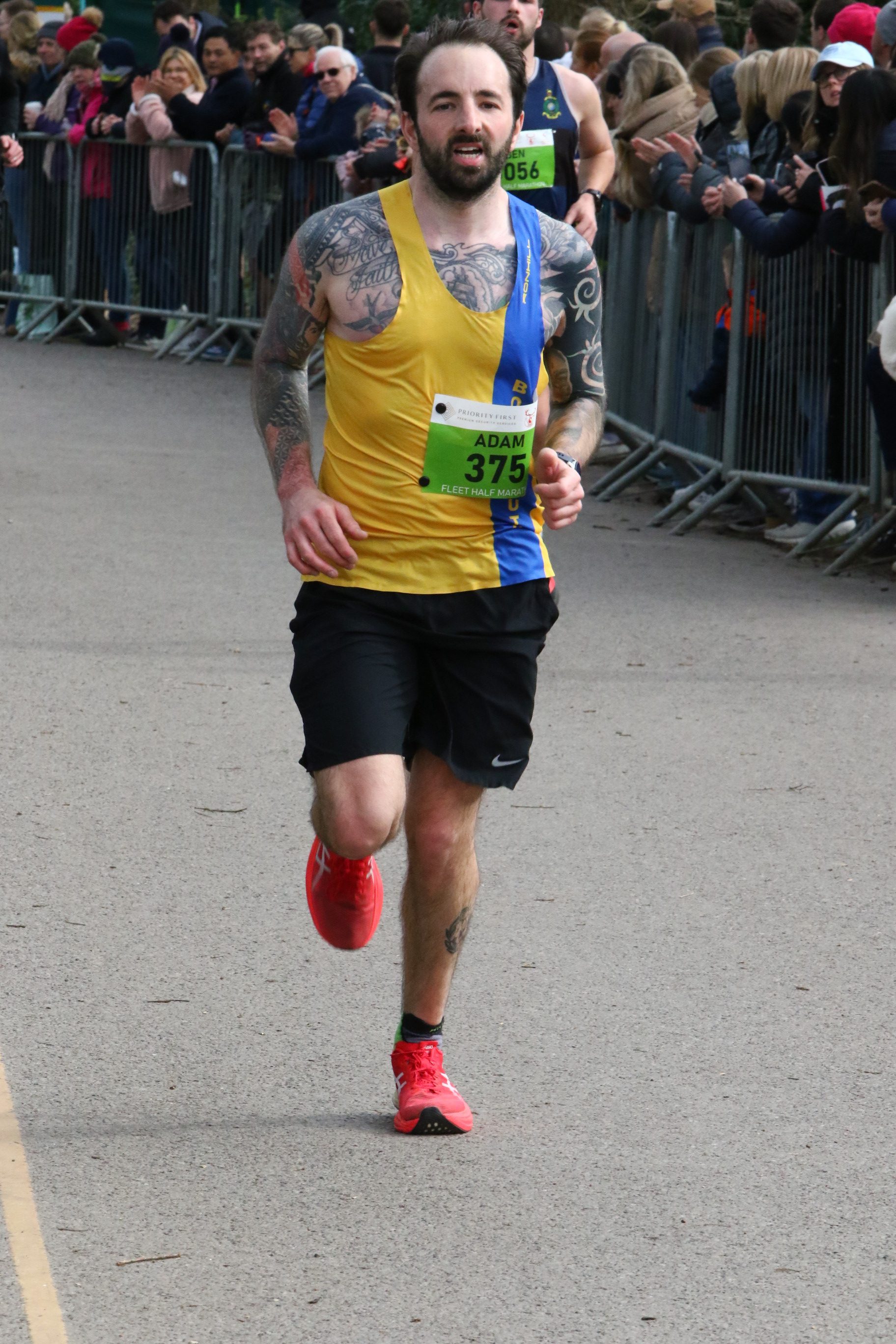
Adam got up to 16 miles but didn’t feel he could go on for another 10
Mike’s race followed a similarly frustrating trajectory. Moving comfortably between 6:20 and 6:30 pace through the opening nine miles, he looked well set before the now-familiar hamstring issue resurfaced. The same problem that had lingered since Fleet returned with force. He battled on briefly, but the situation quickly deteriorated to the point where he could barely put weight through his left side. From there, it became a long and painful limp back towards the tram—hardly the finish line he had envisaged.
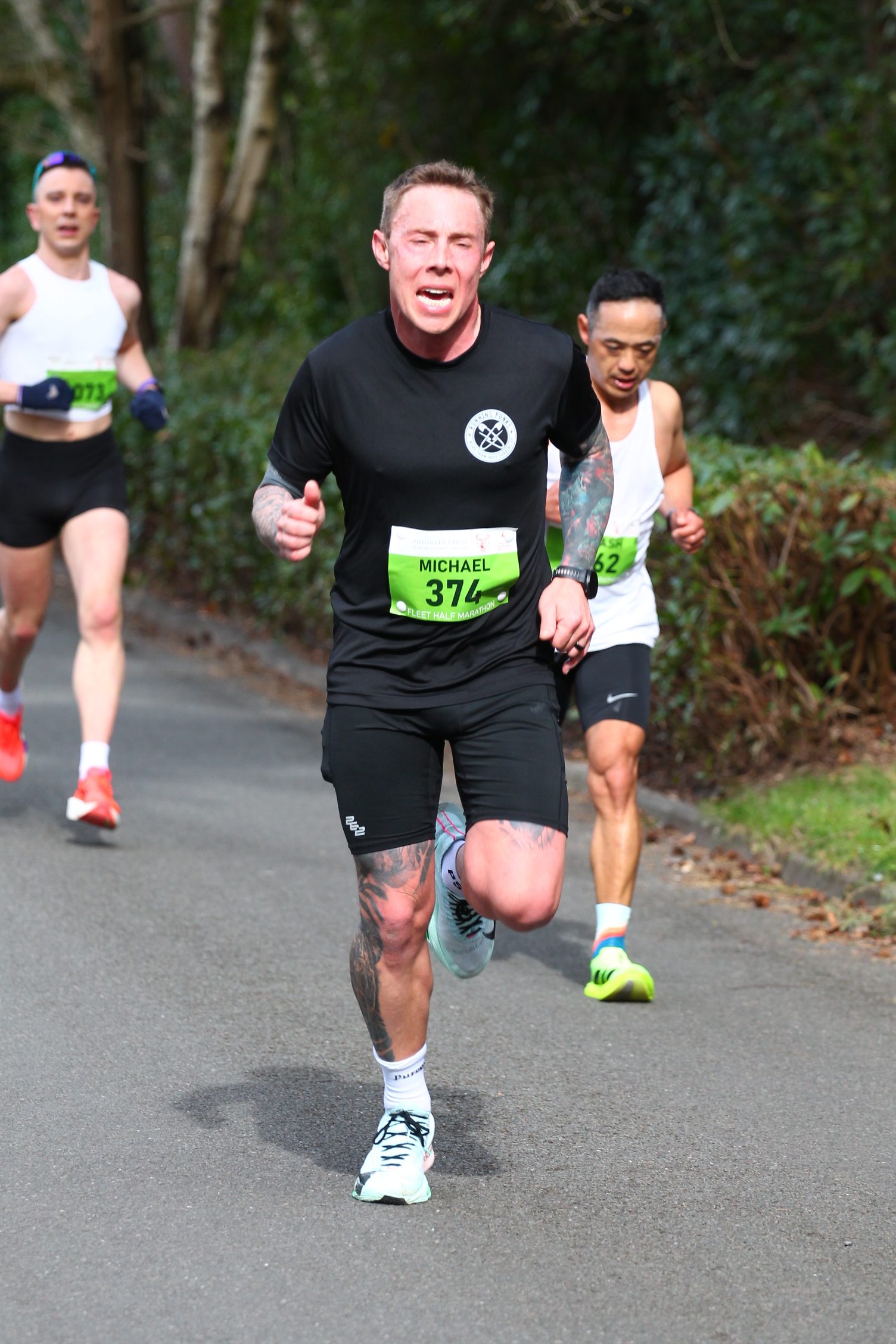
Despite some inury concerns, Mike was determined to give it a go
And so, a day that had promised much ultimately delivered disappointment for both athletes.
As if to underline the challenge, Adam’s ordeal didn’t end with his withdrawal—he still faced a 35-minute walk back to collect his bag, followed by another hour-long trek to the car. Not a day he’ll be keen to relive in a hurry.
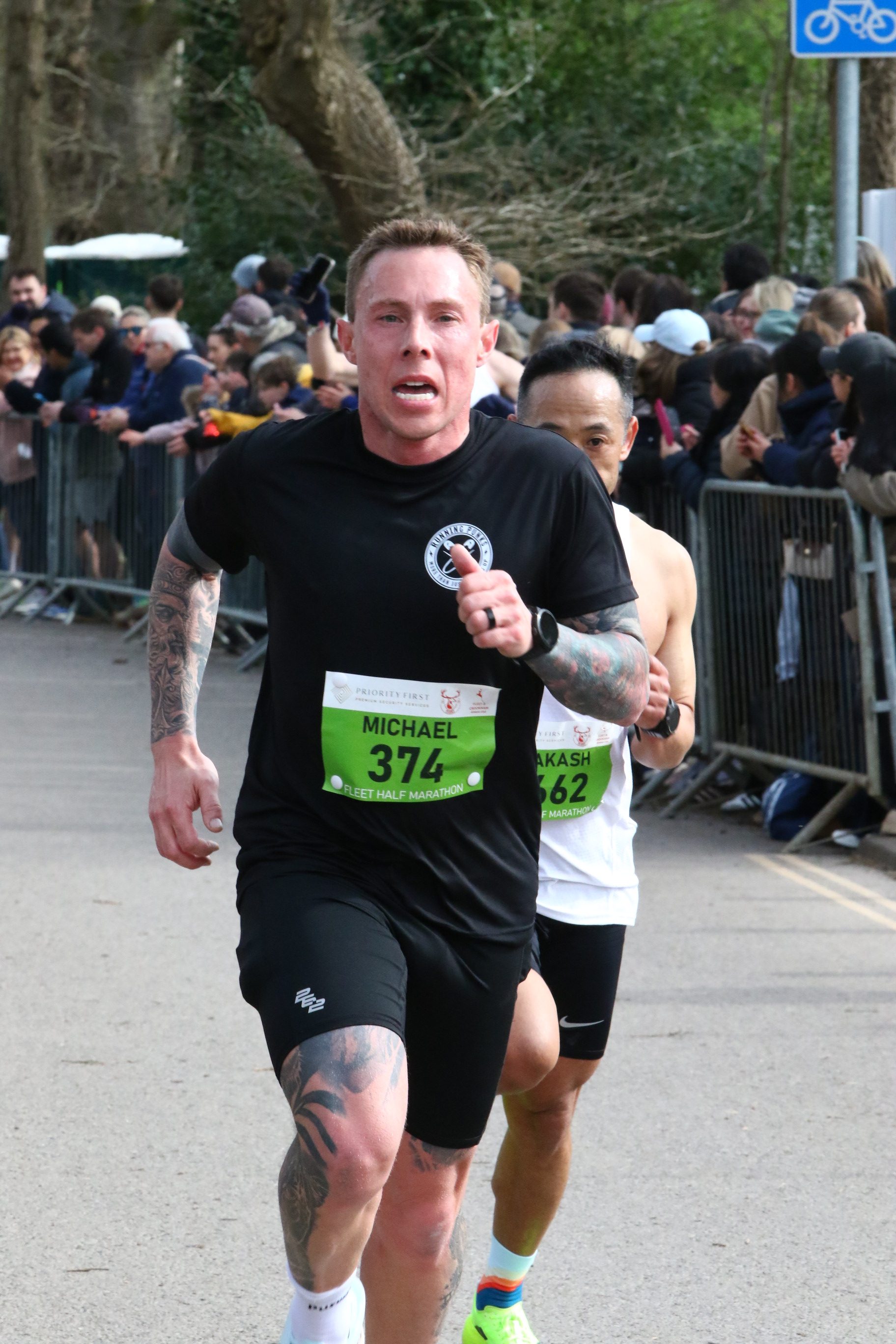
Mike managed to make it to 9 miles before a hamstring issue halted his progress
At the sharp end of the race, victory went to Yohan Lidove in 2:15:18, just holding off William Strangeway (2:15:42), with Charlie Brisley taking third in 2:16:04. The women’s race was won by Naomi Robinson in 2:36:56, ahead of Heather Townsend who finished in 2:37:40.
For Adam and Mike, it wasn’t the outcome they had trained for, nor the one their form suggested was possible. But that is the nature of marathon running—unforgiving, unpredictable, and occasionally cruel.
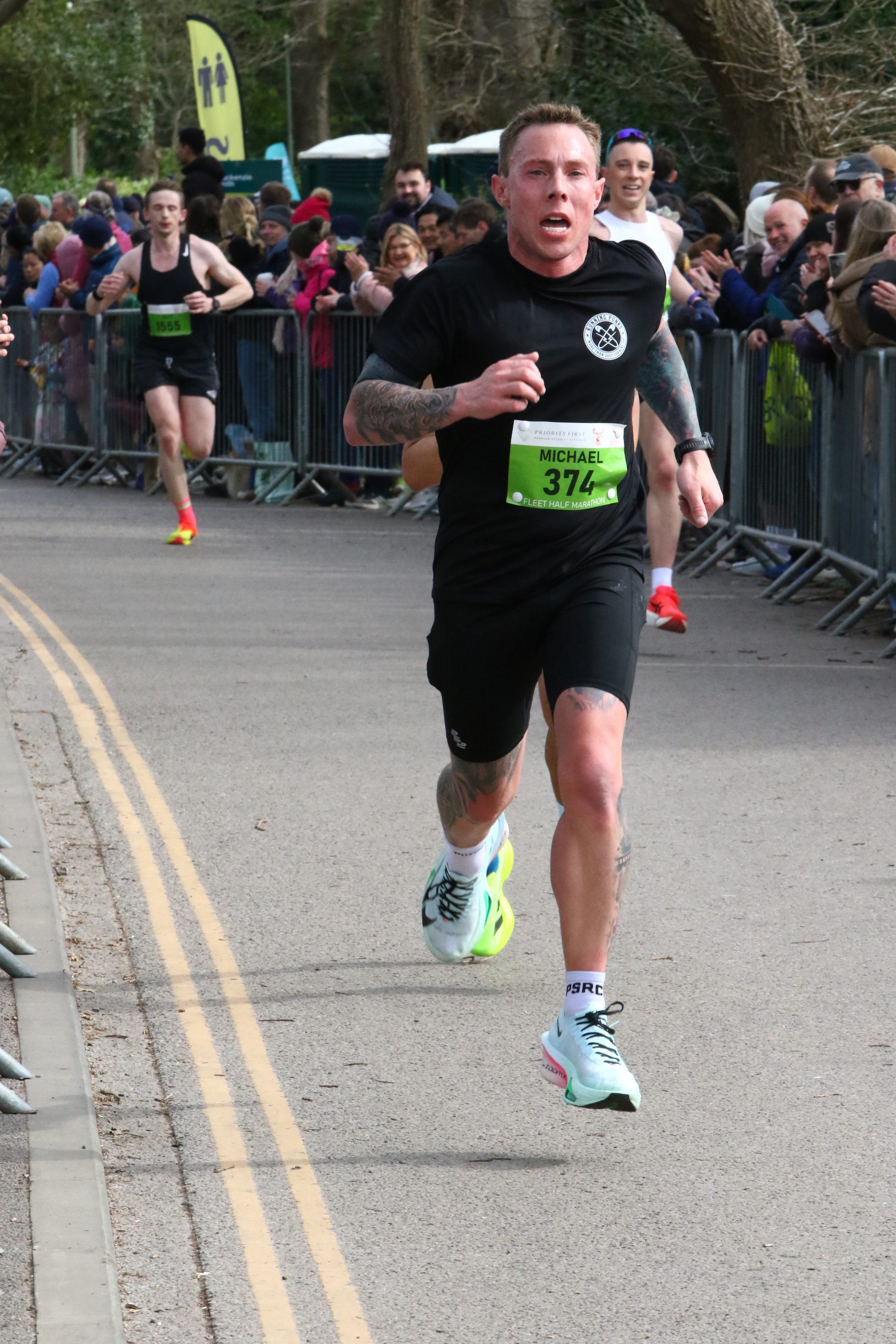
It was destined not to be for Mike on this occasion but he’ll be back
What does remain beyond doubt, however, is their ability. The training, the performances at Fleet, and the resilience shown even in adversity all point in one direction. This one simply wasn’t their day.
There will be others.