
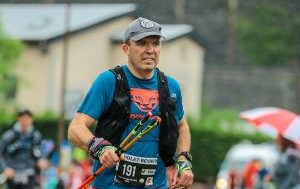
Patrick returned to the mountains of the Valle d’Aosta with a steely determination to succeed
If at first you don’t succeed, try again and make damn sure you get the job done next time! That was Bournemouth AC man Patrick Kingston‘s philosophy was as he returned to the formidable TOR130 Tot Dret in Italy’s Aosta Valley, hoping that this time he’d come away with a rather different story to tell.
Covering a nominal 130 kilometres, with a frankly ridiculous 12,000 metres of ascent, the route winds its way through the spectacular mountains of Italy’s Aosta Valley, starting in Gressoney-Saint-Jean and finishing in Courmayeur. With Monte Rosa, Cervino and Mont Blanc providing the sort of backdrop that makes you stop and stare, it would be easy to forget that you have another mountain to climb, another pass to cross and another several thousand metres of ascent to negotiate.
Easy, that is, until you remember why you’re there.
The TOR130 is a sort of little brother to the legendary Tor des Géants, a race widely regarded as one of the toughest and most fascinating trail-running challenges in the world. Little brother, perhaps, but not one to be underestimated. With a start time of 9pm, runners begin their adventure in darkness, continue through the following day and into a second night, if necessary, before those still going eventually emerge into the next day and the welcome sight of the finish line.
Sleep becomes a luxury, food becomes a logistical exercise and putting one foot in front of the other becomes an increasingly complicated business. All in some of the most beautiful scenery imaginable.
Naturally, Patrick thought it was worth another go and had the belief from within that he could get through it this time round.
One unfinished piece of business
Patrick had attempted the TOR130 the previous year, but the mountains had ultimately got the better of him. He managed an astonishing 90.6km of the 130km route, accumulating around 25,000 feet of elevation in 28 hours and 18 minutes before finally reaching the point where he simply couldn’t go any further.
For most of us, that would represent quite enough mountain climbing for one lifetime. For Patrick, however, it represented unfinished business.
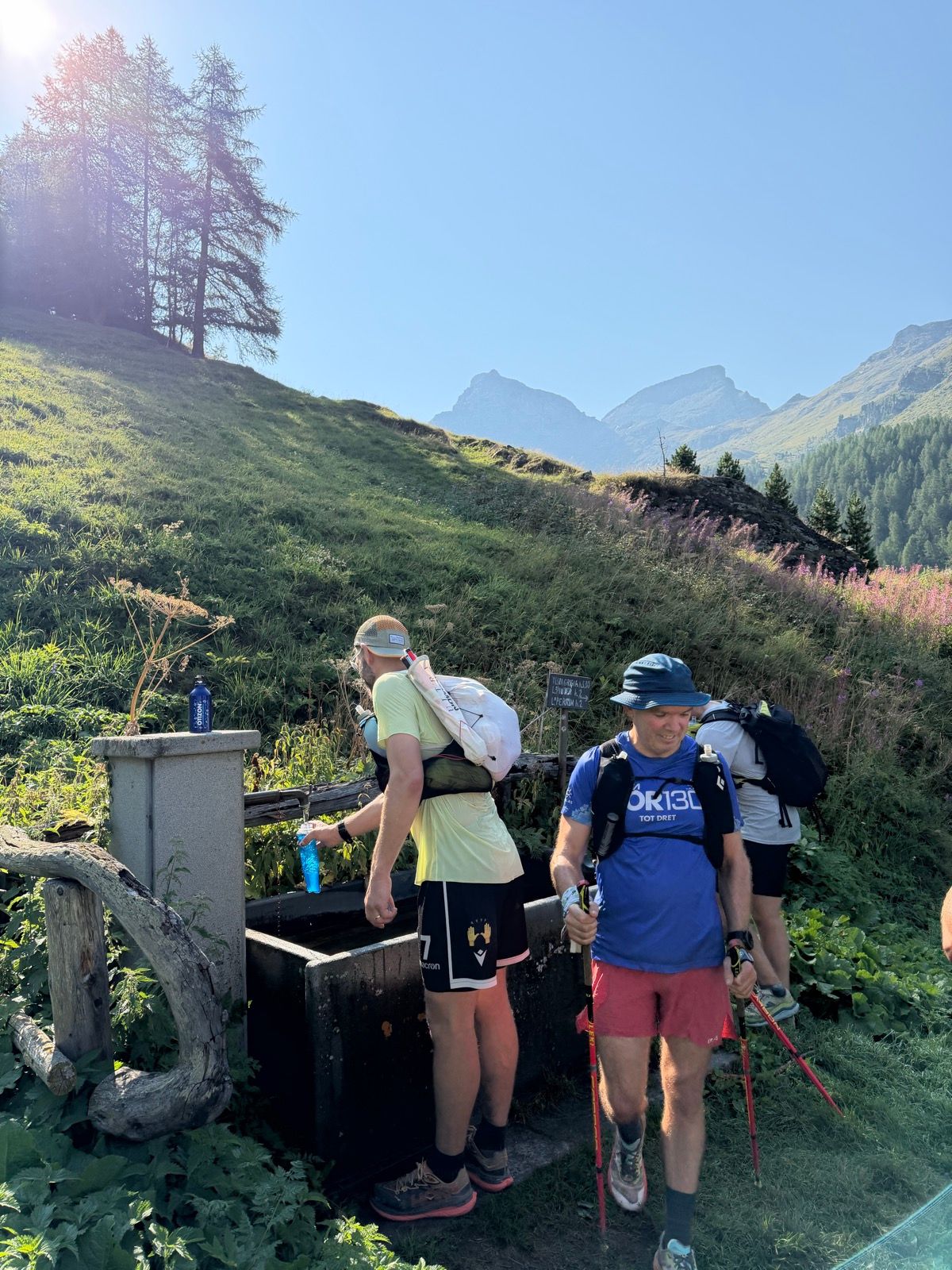
Patrick had been on a recce of the course
There were lessons to be learned from that first attempt, and rather than allowing the experience to dent his confidence, he set about preparing for another crack at the challenge. The determination to return stronger, better prepared and more capable of seeing it through never disappeared.
And he certainly hadn’t spent the intervening months putting his feet up.
Over the summer, Patrick tackled the Verbier Marathon in the Swiss Alps, a race featuring 3,000 metres of ascent, before taking on the Crazy Mountain 100 in Montana, USA. That little excursion involved 102 miles and 21,000 feet of elevation.
So, by the time the TOR130 came around again, Patrick had accumulated a rather useful collection of mountain miles and some serious experience of what it takes to keep going when the going gets decidedly unpleasant.
He was ready to give it another go.
Two nights, one very long day and a finish line
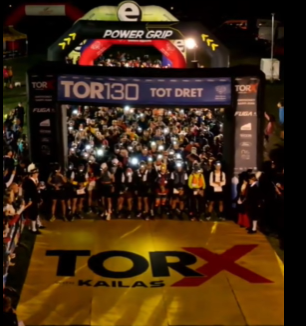
The race started at 9pm
When the starting gun went at 9pm, the runners headed into the darkness, embarking on a journey that would test their physical endurance, mental resilience and ability to keep making sensible decisions while profoundly tired.
The first night gave way to daylight, but the mountains offered little respite. The climbing continued, the kilometres ticked by slowly and the prospect of another night on the trails loomed.
For Patrick, every checkpoint and every stretch of trail represented another step towards putting last year’s disappointment behind him. There would inevitably be difficult moments, but this time he had the experience of his previous attempt, a summer of serious preparation and, crucially, the belief that he could finish what he had started.
And finish he did.
Patrick completed the full course, covering an actual distance of 136.1km in 38 hours, 43 minutes and 58 seconds.
Yes, that’s more than a day and a half of running, climbing, descending and persuading the legs to continue doing things that legs probably weren’t designed to do for quite so long.
This time, there was no stopping at 90.6km. No wondering what might have been. Just the satisfaction of reaching Courmayeur and knowing that he’d conquered the challenge that had eluded him twelve months earlier.
A formidable field
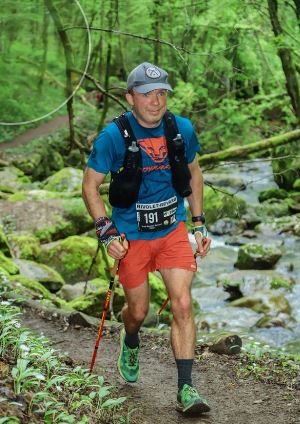
Patrick had come back stronger than ever
The scale of Patrick’s achievement becomes even clearer when you look at the results.
He finished 140th out of the 240 runners who completed the course, with a further 169 failing to reach the finish. In other words, significantly more runners failed to complete the challenge than finished it.
Patrick was also the sixth British runner to cross the finish line, an outstanding achievement in a race attracting competitors prepared to push themselves to their absolute limits.
At the sharp end of the field, Frenchman Nicolas Francesco Lemoine took victory in 20:53:03, followed by China’s Ke Li in 22:34:23. Italian Giulio Vettori completed the podium in third place with 22:51:38.
The women’s race was won by Stephanie Howe in 25:35:47, an exceptional performance that also earned her seventh place overall. Fangyuan Wen finished second female, placing 17th overall in 27:43:12.
Britain’s leading finisher was Sam Skinner, who secured 25th place in 29:51:21.
These are formidable performances in an event where simply getting to the finish line is an achievement in itself.
If at first you don’t succeed…
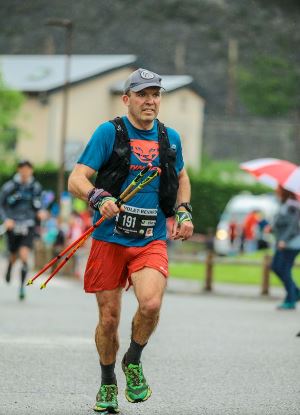
Patrick completed the full 136.1km this time
For Patrick, though, the most important number wasn’t 140th, and it wasn’t the 136.1km he’d covered.
It was the difference between last year’s attempt and this year’s finish.
Last year, he discovered just how brutal the TOR130 could be. This year, he returned having learned from the experience, put in the preparation and refused to let that earlier disappointment define the outcome.
There is something particularly satisfying about that. Ultra-running is as much a test of character as it is of physical fitness. Training can prepare you for the distance, and experience can teach you how to manage the inevitable difficulties, but there comes a point in a race like this when you have to dig deep and find the determination to carry on.
Patrick did precisely that.
To complete 136.1km of punishing Alpine trails, with 12,000 metres of climbing and two nights’ worth of darkness and fatigue to contend with, is an extraordinary achievement. To do it after having previously fallen short makes it all the more special.
The mountains hadn’t got any smaller. The climbs hadn’t become any easier. Patrick had simply returned better prepared, wiser from experience and determined to see it through.
And that is a lesson that extends well beyond trail running.
Sometimes, success comes not from getting everything right the first time, but from having the courage to try again when things don’t go to plan. Learn from the experience, put in the work, keep believing and give yourself another chance.
Last year’s 90.6km was a hard-earned lesson. This year’s 136.1km was the answer.
And somewhere in the magnificent mountains of the Aosta Valley, the TOR130 Tot Dret has one fewer unfinished piece of business to attend to.