
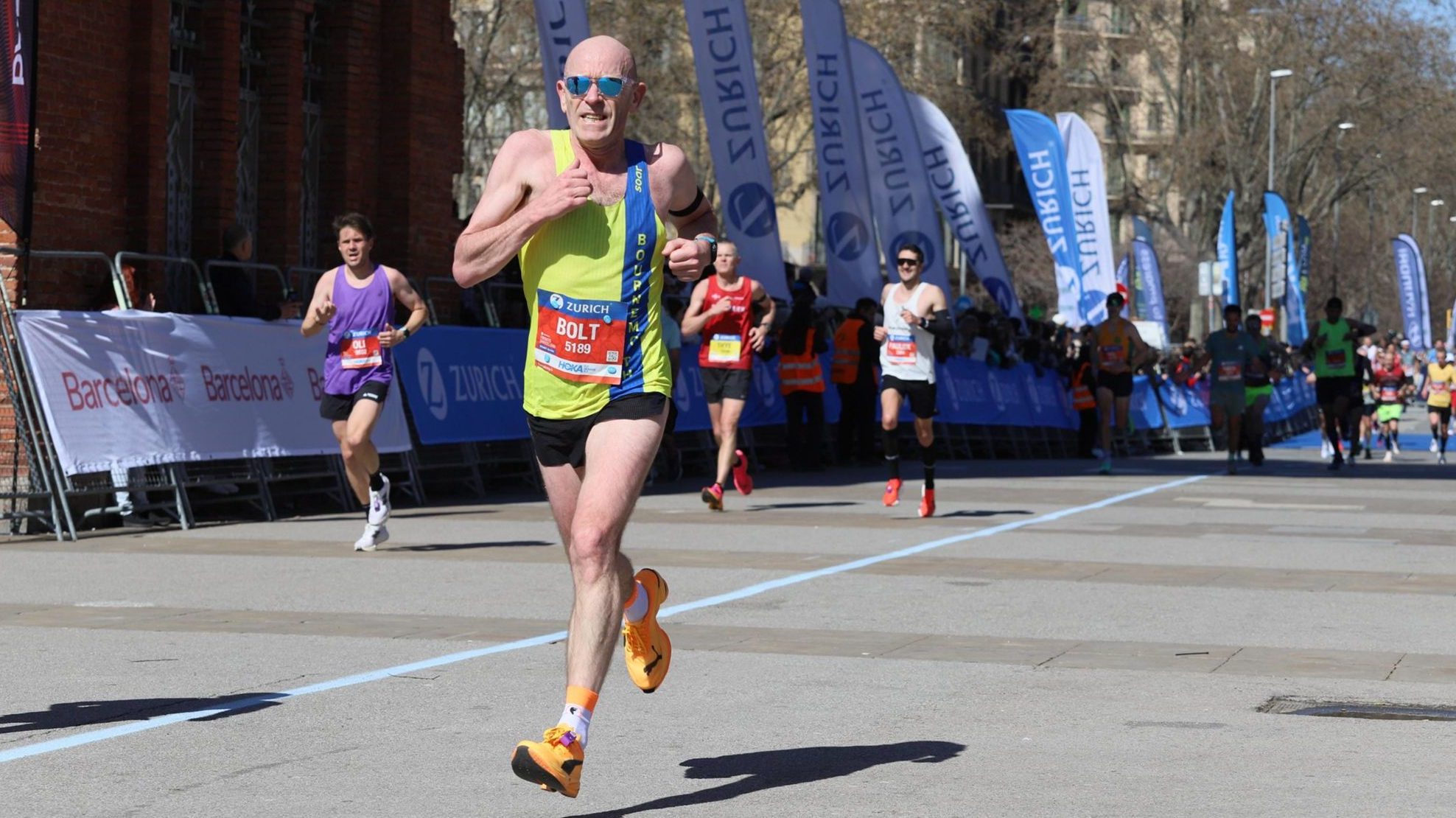
All the signs where to suggest that the Barcelona Marathon could be the best one yet for Barry Dolman
The spring marathon season took Bournemouth AC onto the streets of Catalonia this year, where Barry Dolman and Louisa Rowland lined up alongside a record-breaking field of more than 30,000 runners at the 2026 Zurich Marató Barcelona.
Both athletes arrived in Spain with very different stories behind them, but each would leave with a performance that reflected months – and in Barry’s case, years – of persistence and resilience.
Barry bounces back
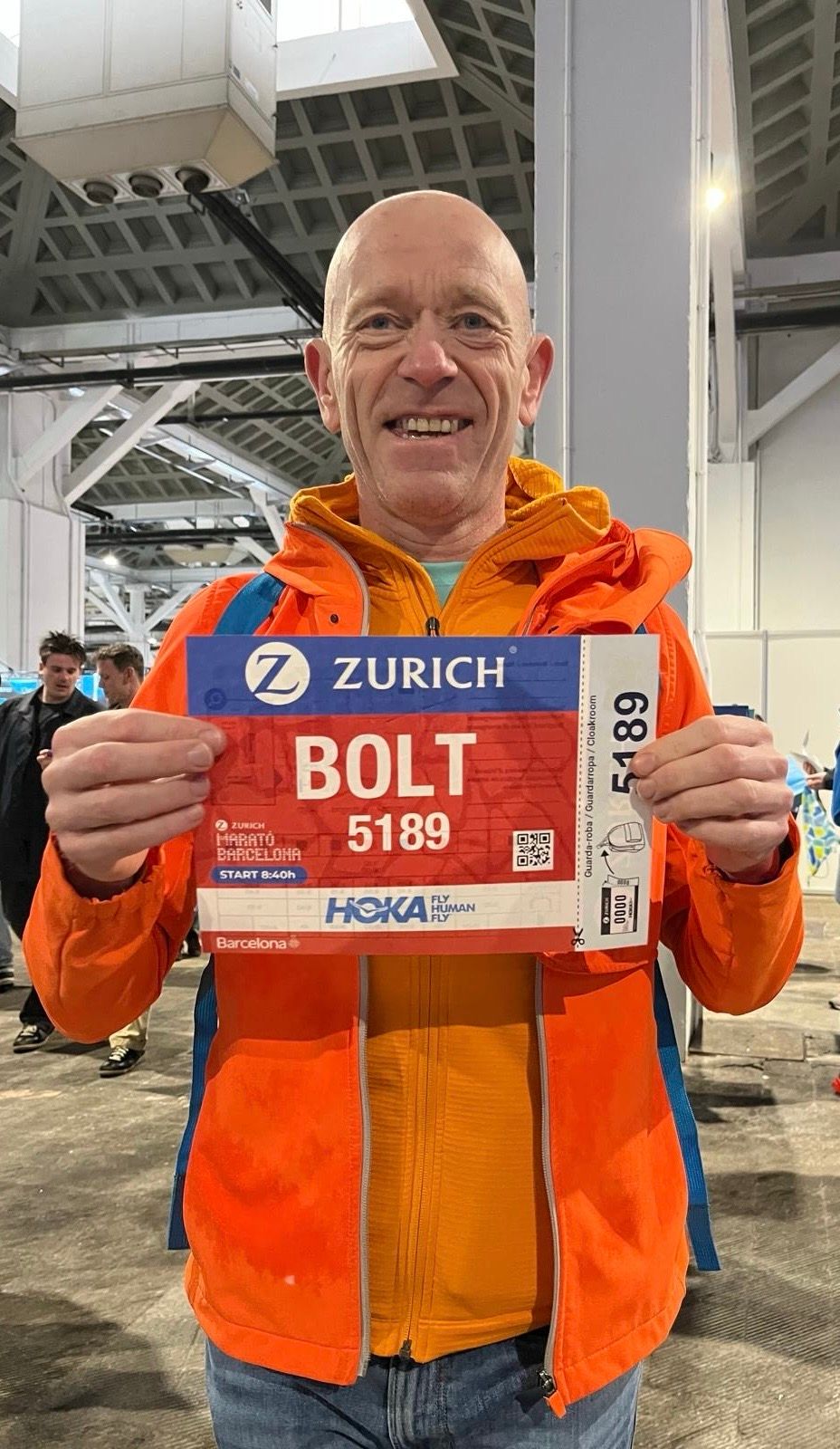
Barry had every reason to be full of optimism when he picked up his number from the expo
Barry’s last 12 months have been anything but straightforward. After three months of meticulous preparation for the London Marathon last spring, a calf injury struck at precisely the wrong time, derailing what had promised to be a career-defining run. He battled through to finish, but the clock told a story that his fitness simply did not.
He refused to let that be the final chapter. A strong sub-2:55 in New York in November signalled that the engine was still very much intact, even if his personal best of 2:53:16 from September 2024 remained untouched.
This winter he returned to what worked. Wednesdays meant the now-familiar 5 x 2km session at quicker than marathon pace. Fridays brought a half marathon effort. Saturdays were reserved for parkrun, and Sundays for the kind of 32–35km long runs that quietly build the steel required for racing over 26.2 miles. By mid-January he was logging close to 80 miles a week, week in, week out.
The early season form was there for all to see. A 36:49 at Stubbington – achieved after already running half marathon distance earlier that morning – was impressive enough, but he went one better at the British Masters 10km Championships in Chichester, slicing that down to an outstanding 35:49.
And then there was Highcliffe Beach parkrun, where Barry finally got one over on training partner and clubmate Rob Spencer, clocking 17:51 on a course that rarely gives anything away. Those who know that stretch of sand and shingle will appreciate just how serious a performance that was.
Nerves before the gun
Even in the final week before Barcelona there was uncertainty. Barry had been nursing pain around the adductor where it meets the pelvis and abdominal wall, symptoms he suspected might point to adductor tendinopathy. Whether it was psychosomatic or simply one of those last-minute niggles that plague marathoners, the issue disappeared on race morning – a welcome relief as he toed the line in a packed city-centre start.
A race of patience and progression
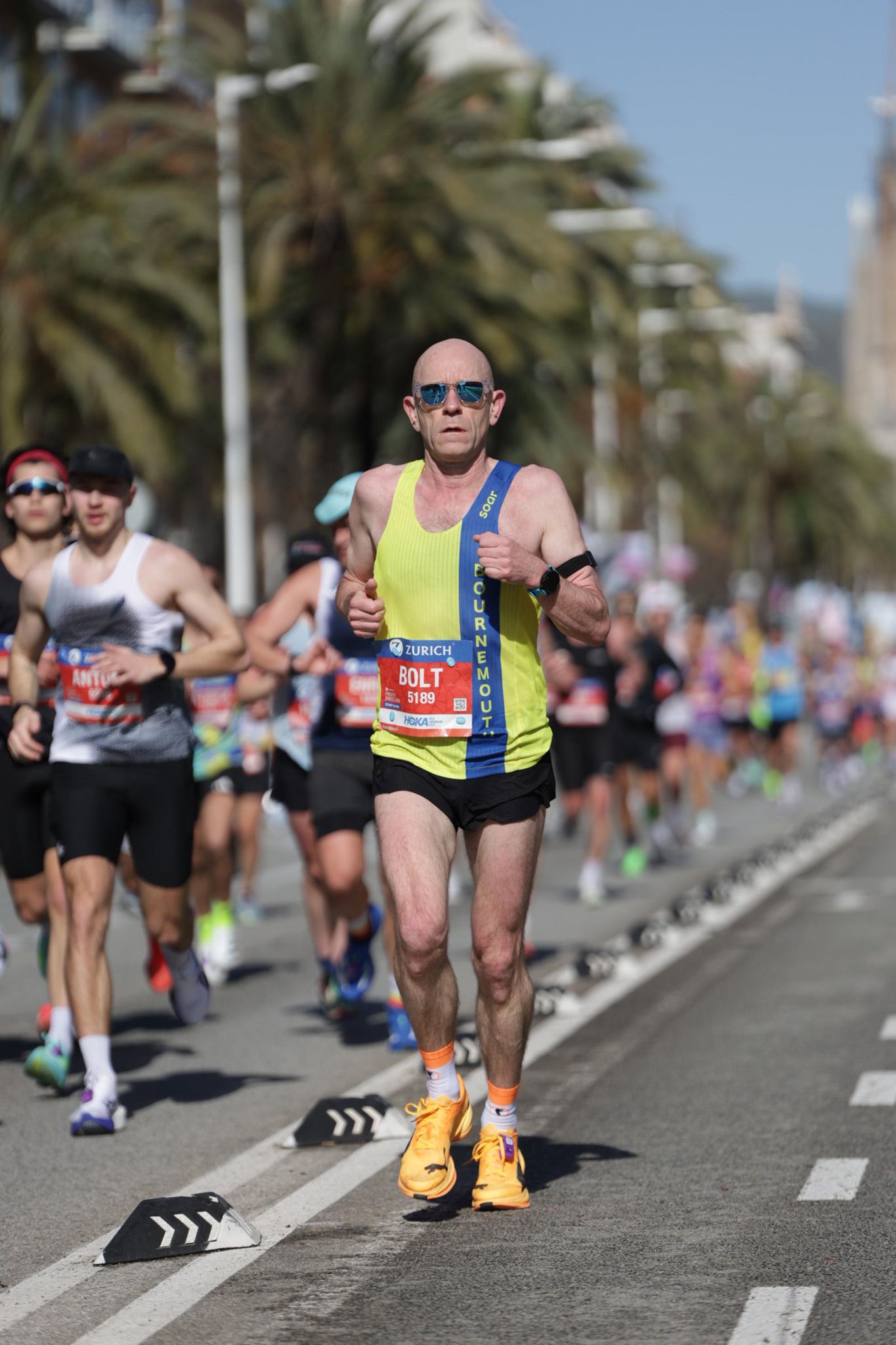
There was a lot of traffic around in the early part of the race
Like Valencia in 2023, Barcelona began with congestion and caution. Barry’s opening mile of 6:53 was dictated more by traffic than by choice, followed by a 6:44 and 6:39 as he began to find daylight. At 5km he was buried in 3,419th place.
From there, he began a relentless march through the field.
A series of downhill miles saw splits drop to 6:25 and 6:11, and by the time he slipped past the three-hour pacing group after seven miles, the race finally opened up. With space to stride, his rhythm improved immediately: 6:18 for mile eight, followed by controlled climbing miles of 6:34 and 6:30 to reach 10 miles in around 1:05:30.
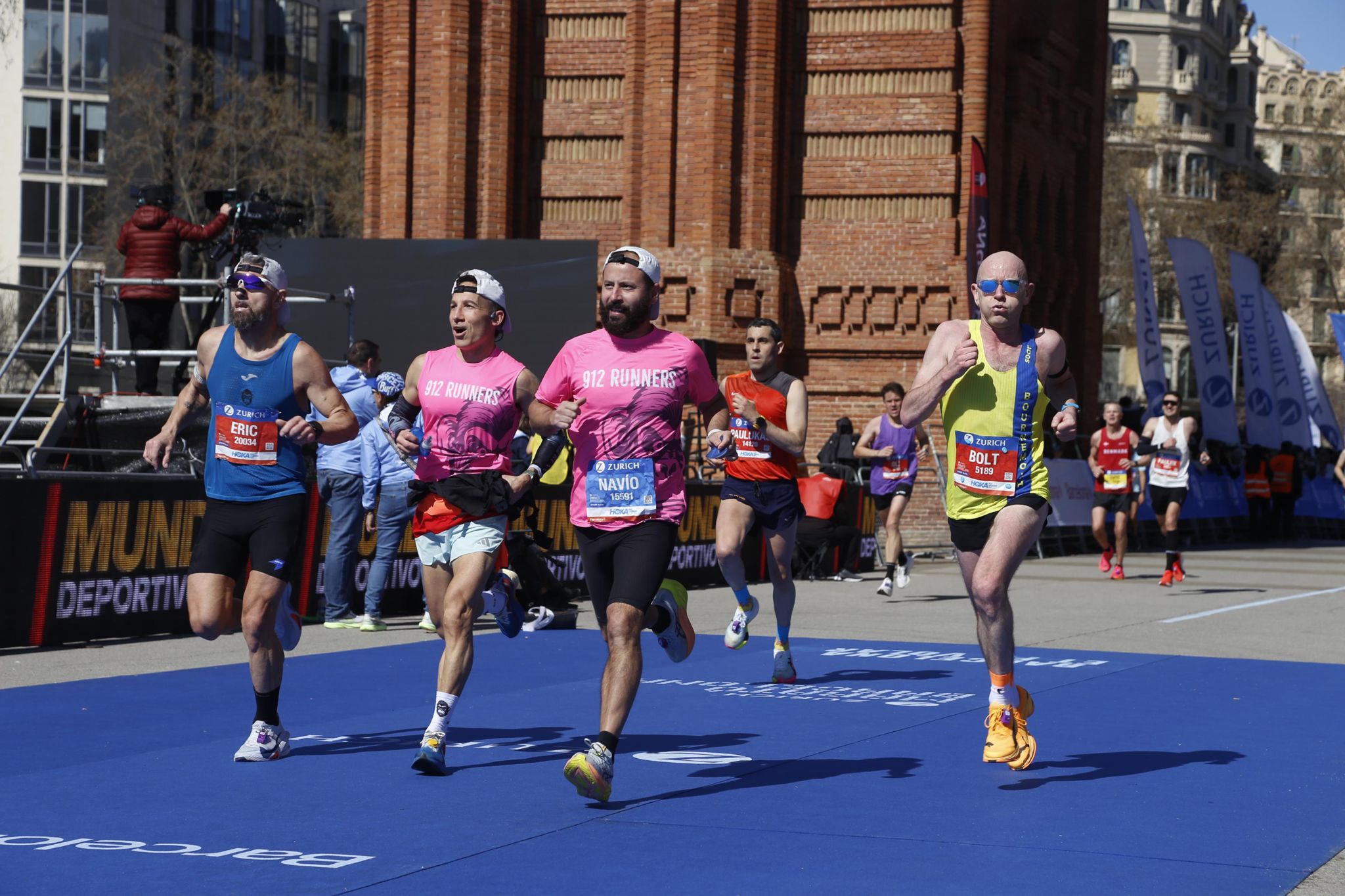
Once Barry got into his stride he just kept moving through the field
Through halfway in 1:26:23 – almost identical to New York but feeling far more comfortable – Barry sensed something was building.
“I was starting to drop into the 19-minute 5km splits and still seeing under four-minute kilometres on the watch. At that stage you’re in that zone where you start to believe you can hold it.”
The decisive second half
The next section of the course offered gentle descents, and Barry used them. Miles ticked by in 6:15, 6:24 and 6:21, and by 25km he had climbed to 1,614th place. His pacing discipline was paying off; each 5km split hovered in the low-19-minute range.
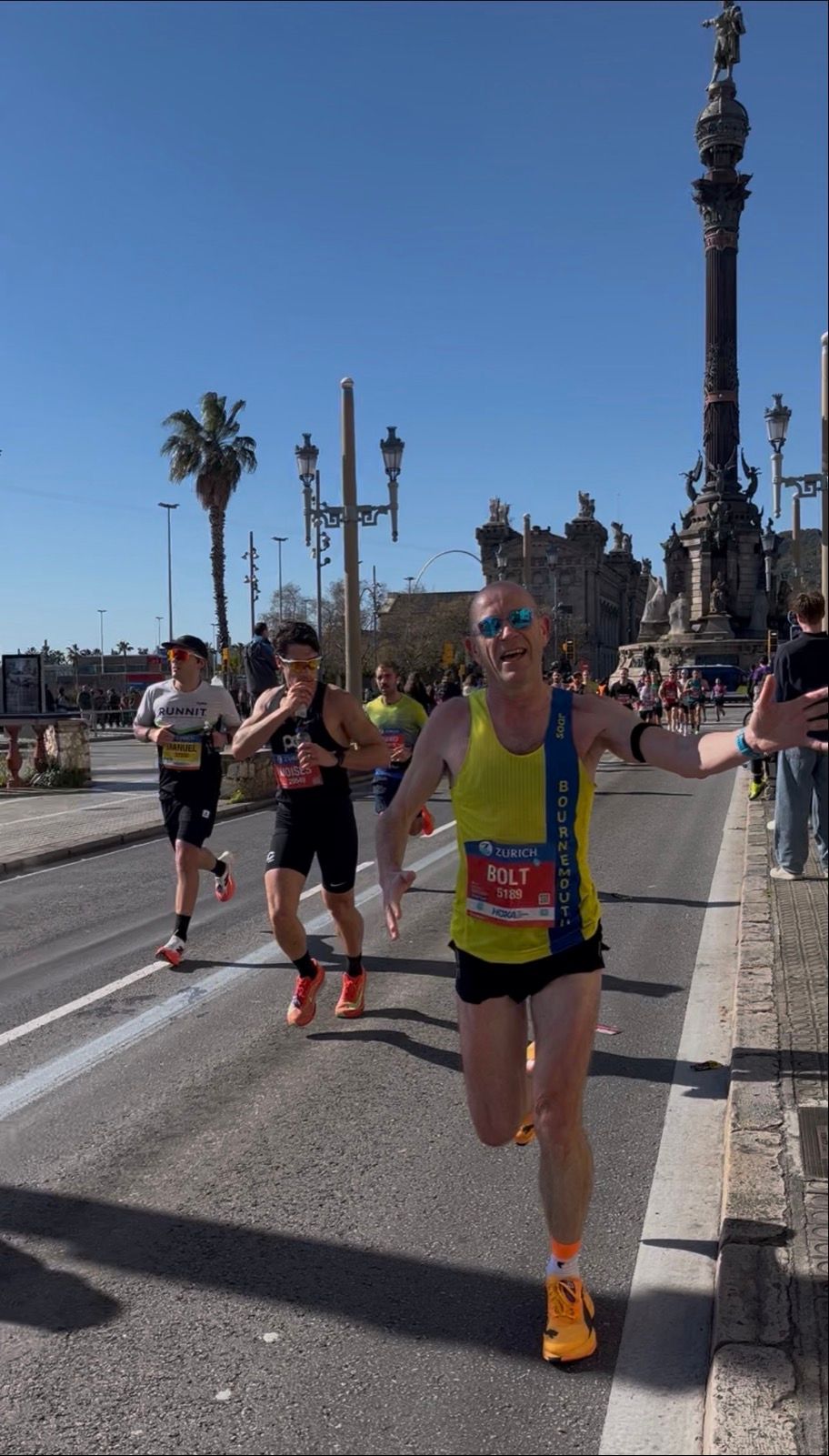
Barry was flying in the second half of the race and feeling really strong
At 32km he checked his watch against the mental arithmetic he has carried since his PB run in Sydney.
“For 2:50 you’re looking for about 2:09 at 32k. I went through in 2:09:08, so I knew if I could just keep running four-minute kilometres I was golden.”
He did more than hold them. From 37km he sensed he could push again and aimed to dip under 19 minutes for the final 5km. The closing miles read like the splits of a 10km race: 6:11, 6:10, then a fierce closing effort of 6:02 and 6:04 before one last uphill grind in 6:14.
His final 5km of 18:49 sealed not just a negative split but the fastest half marathon he has ever run – 1:22:09 for the second half alone.
Barry crossed the line in 2:48:32, finishing 1,041st out of more than 24,000 finishers and 10th in the M55 category. The distance came up long at 26.5 miles so he actually went through marathon distance in an even more impressive 2:46:35.
“I don’t remember anyone overtaking me after halfway. According to the splits I passed over 2,000 people, which is crazy.”
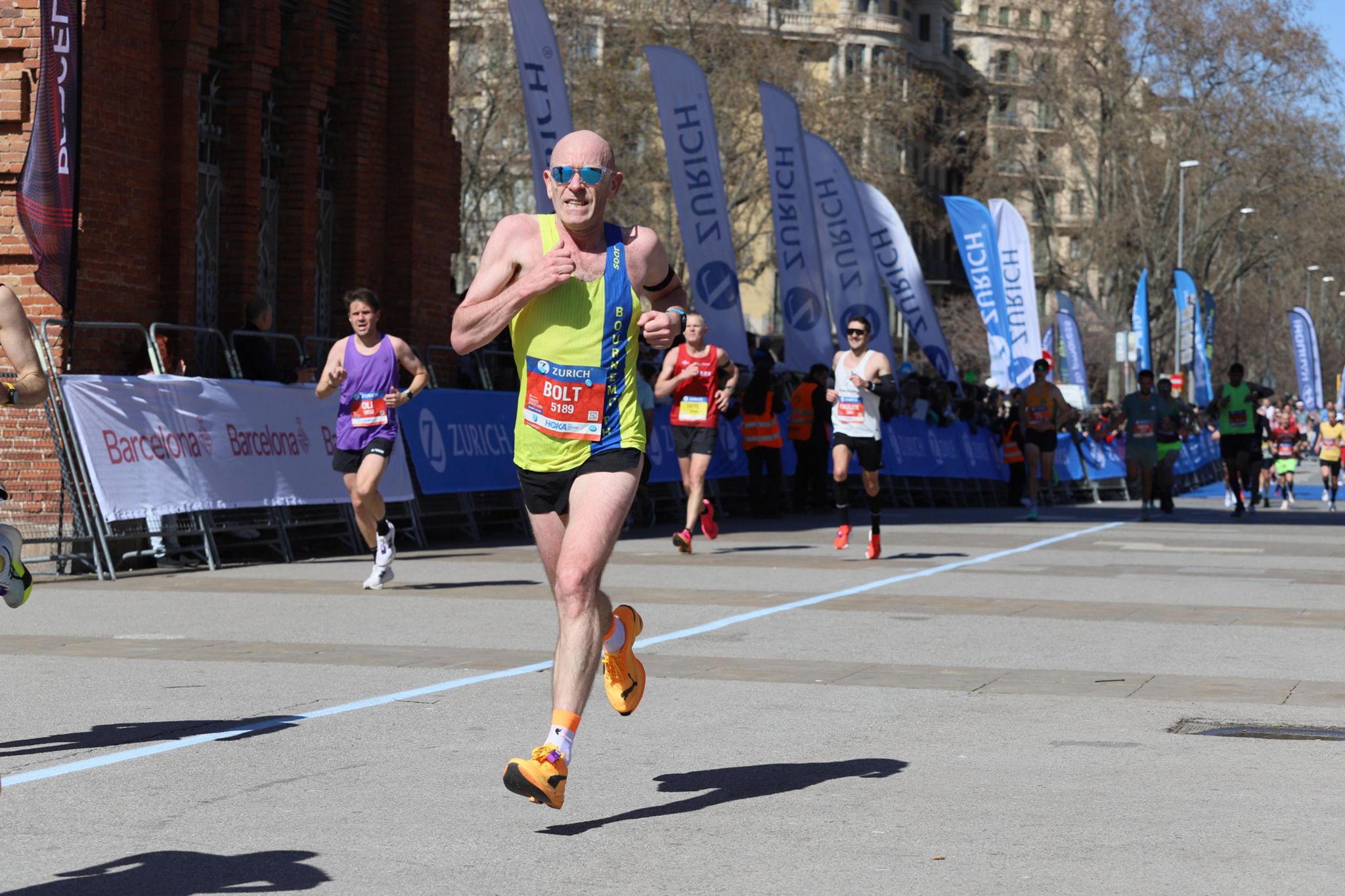
It truly was a run for the ages from Barry
The result has huge implications beyond Barcelona. With the World Marathon Championships heading to Tokyo next year and qualification now based on ranking rather than time, Barry’s world ranking has leapt from 392nd to 134th – a move that could well secure him a coveted place on the start line.
Louisa delivers when it mattered
If Barry’s race was about progression and patience, Louisa Rowland’s was about control, composure and an unwavering commitment to the plan.
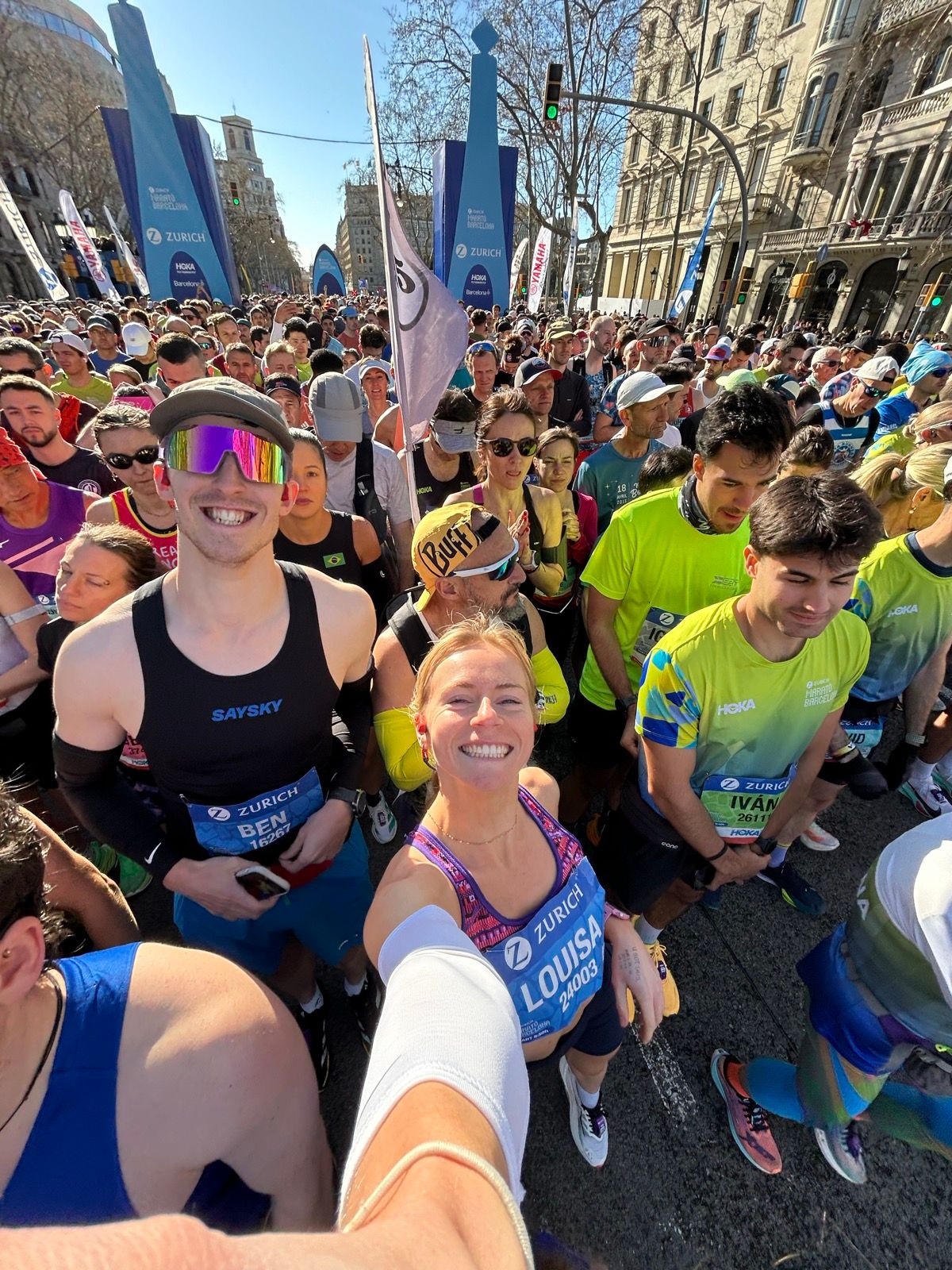
Louisa Rowland had trained well and was ready to roll
Her previous marathon in Brighton in 2024 had yielded a highly respectable 3:09:16, but Barcelona was always about one thing; breaking three hours.
Training had gone well, with long runs featuring extended blocks at quicker than marathon pace, but as every marathoner knows, the real question is never answered until race day.
Metronomic pacing
From the gun, Louisa executed to perfection. She reached 5km in 21 minutes, sitting 64th female, and 10km in 42 minutes, maintaining her place comfortably inside the top hundred women.
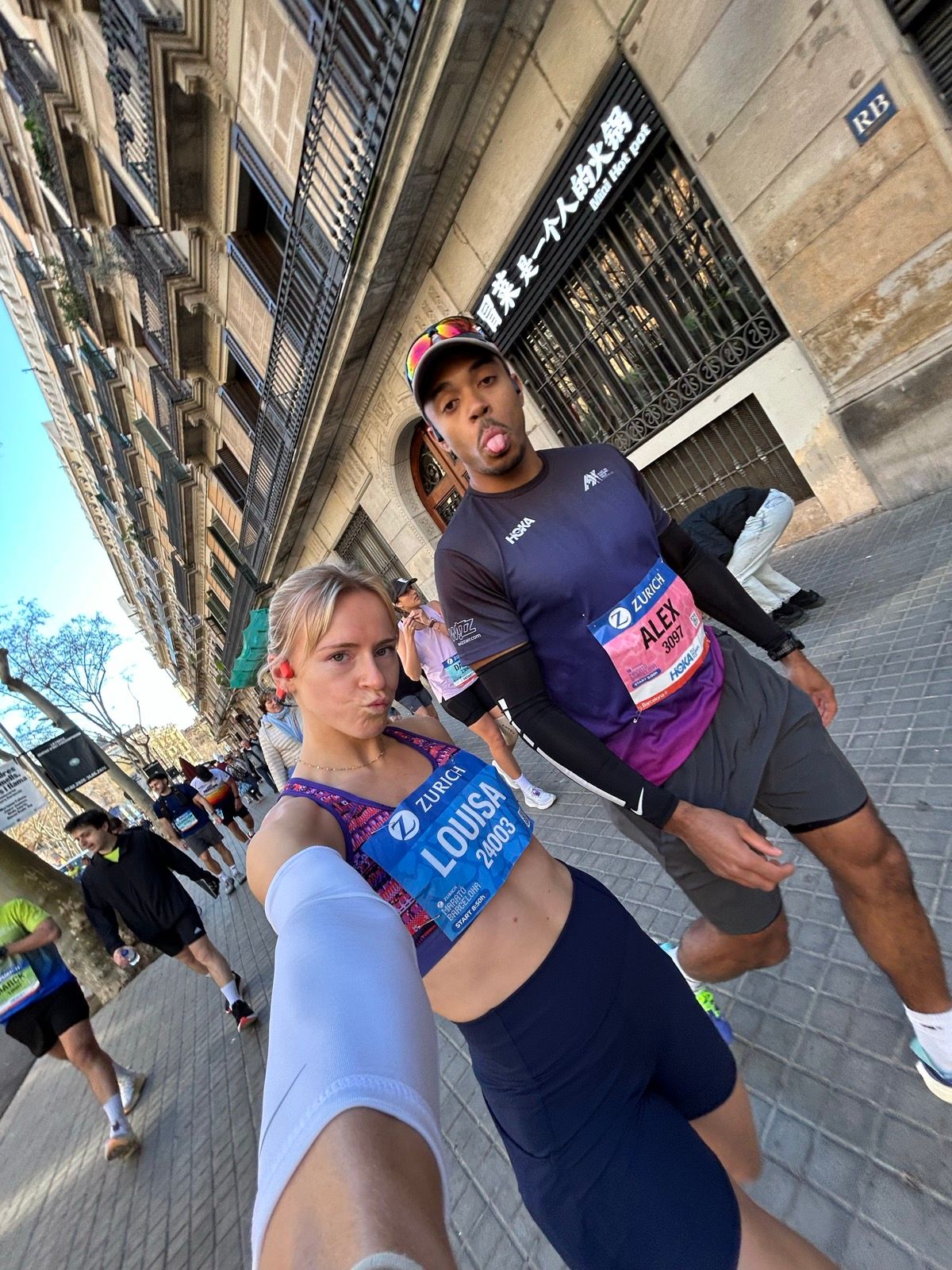
It was a real masterclass in pacing from Louisa
Her mile splits between nine and twelve all fell within a single second – four consecutive miles at 6:47 – and she passed 10 miles in 1:07:39 before hitting halfway in 1:28:38, firmly on course for her sub-three target.
Where many runners begin to falter after 30km, Louisa simply continued to tick off mile after mile at around 6:45 pace. At 30km she was 87th female; by 35km she had moved back up to 82nd.
Even the late uphill drags could not derail her rhythm. Two 6:52 miles through 24 and 25 kept the clock safely in her favour, and at 40km she was still on track at 2:49:55.
Sub three secured
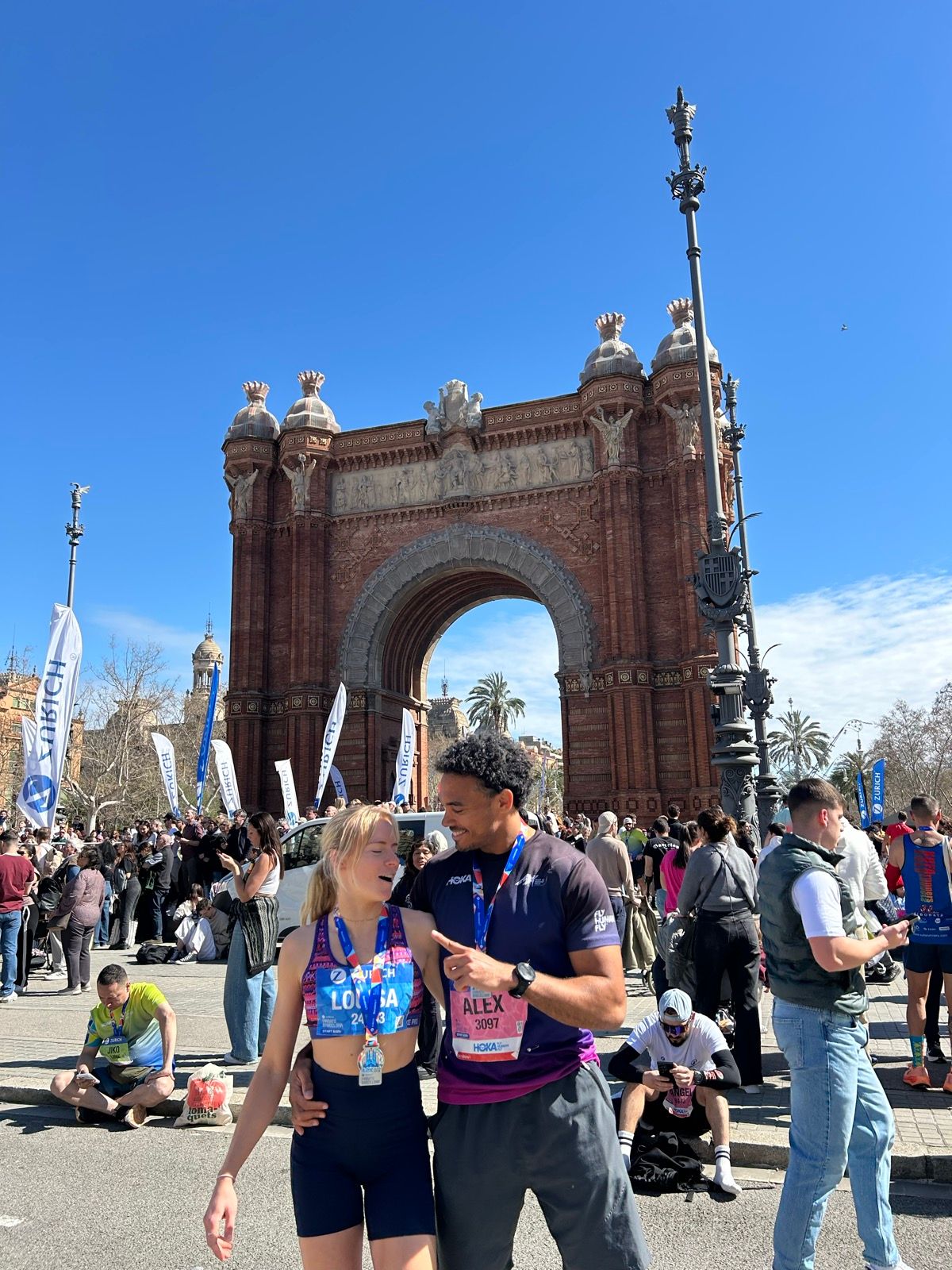
Louisa got her reward for a smart and sensible strategy
Louisa crossed the finish line in 2:59:02, securing the sub-three barrier with just under a minute to spare and finishing 80th out of 7,396 women and 2,146th overall.
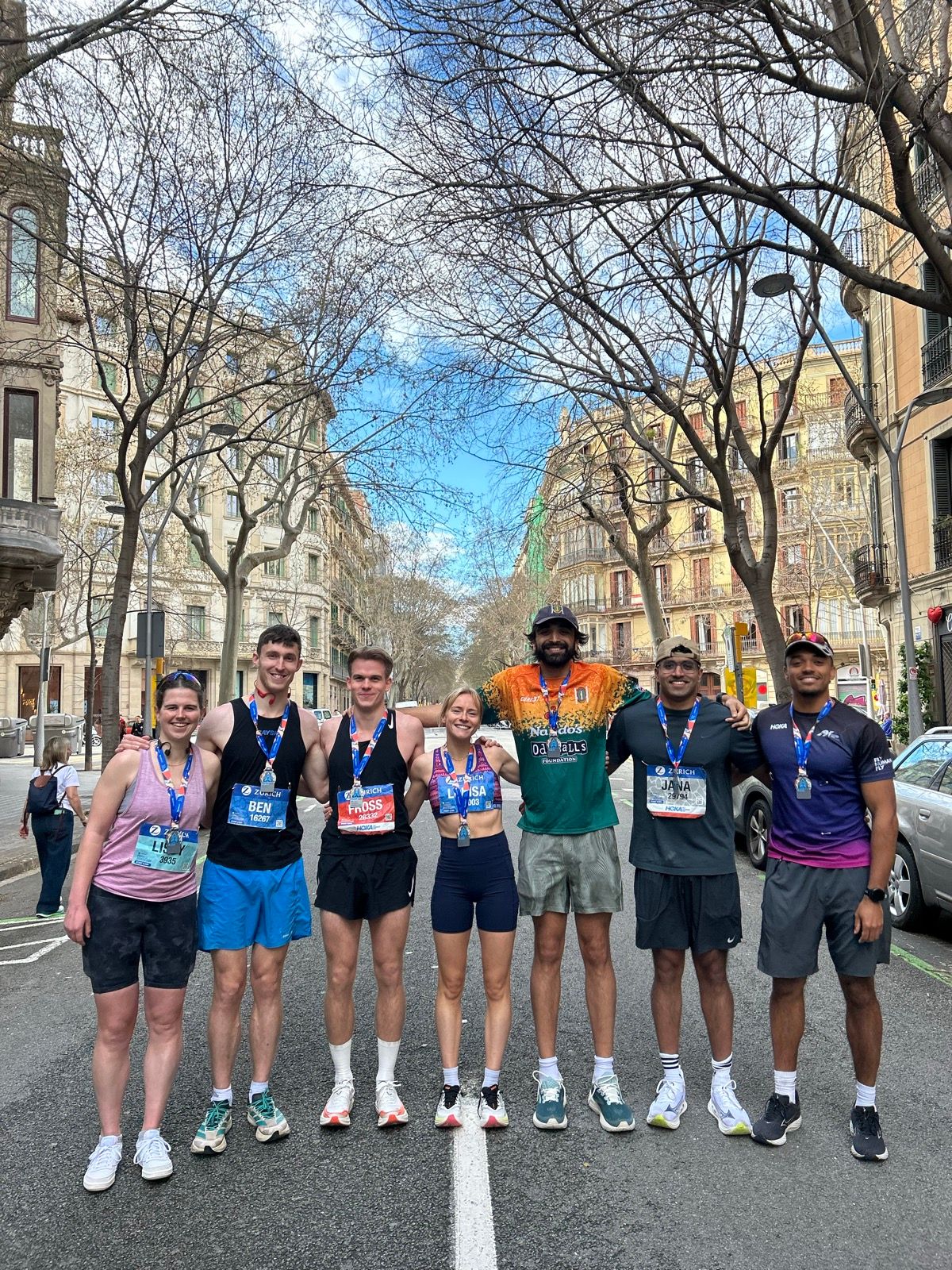
It had been an incredible journey with a happy ending for Louisa
In fact, she covered the official marathon distance in 2:57:31, with the course measuring long on her watch at 26.48 miles – an extra half kilometre that makes her pacing discipline even more impressive.
It was, quite simply, a masterclass in even pacing and mental control.
A pair of performances to remember
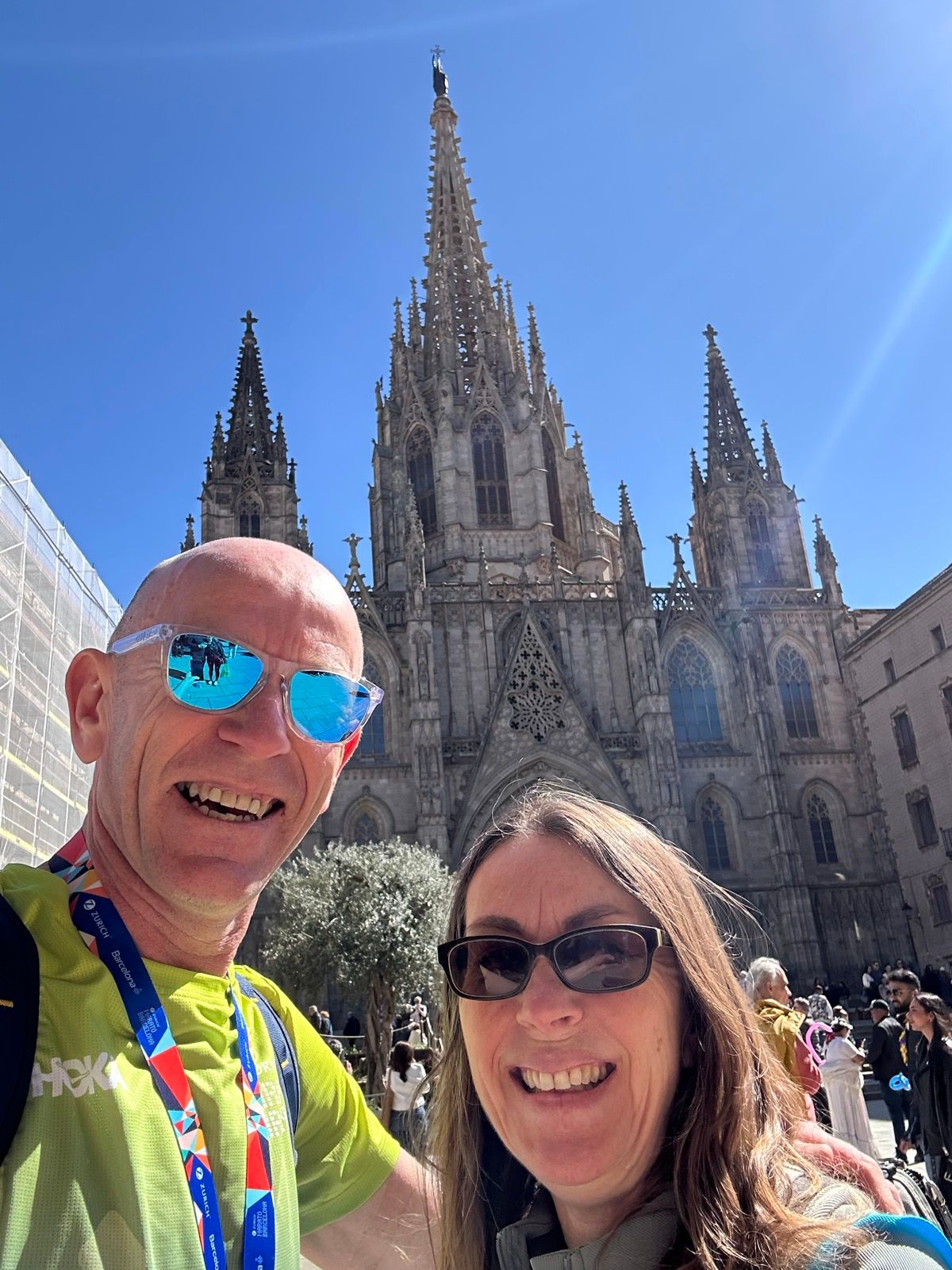
The result moved Barry up the rankings in the Age Group World Marathon charter
For Barry, Barcelona represents a breakthrough that validates months of heavy mileage and years of persistence through injury and near misses. For Louisa, it marks the successful transition from a promising marathon debutant to a sub-three-hour athlete – a barrier that still eludes the vast majority of runners.
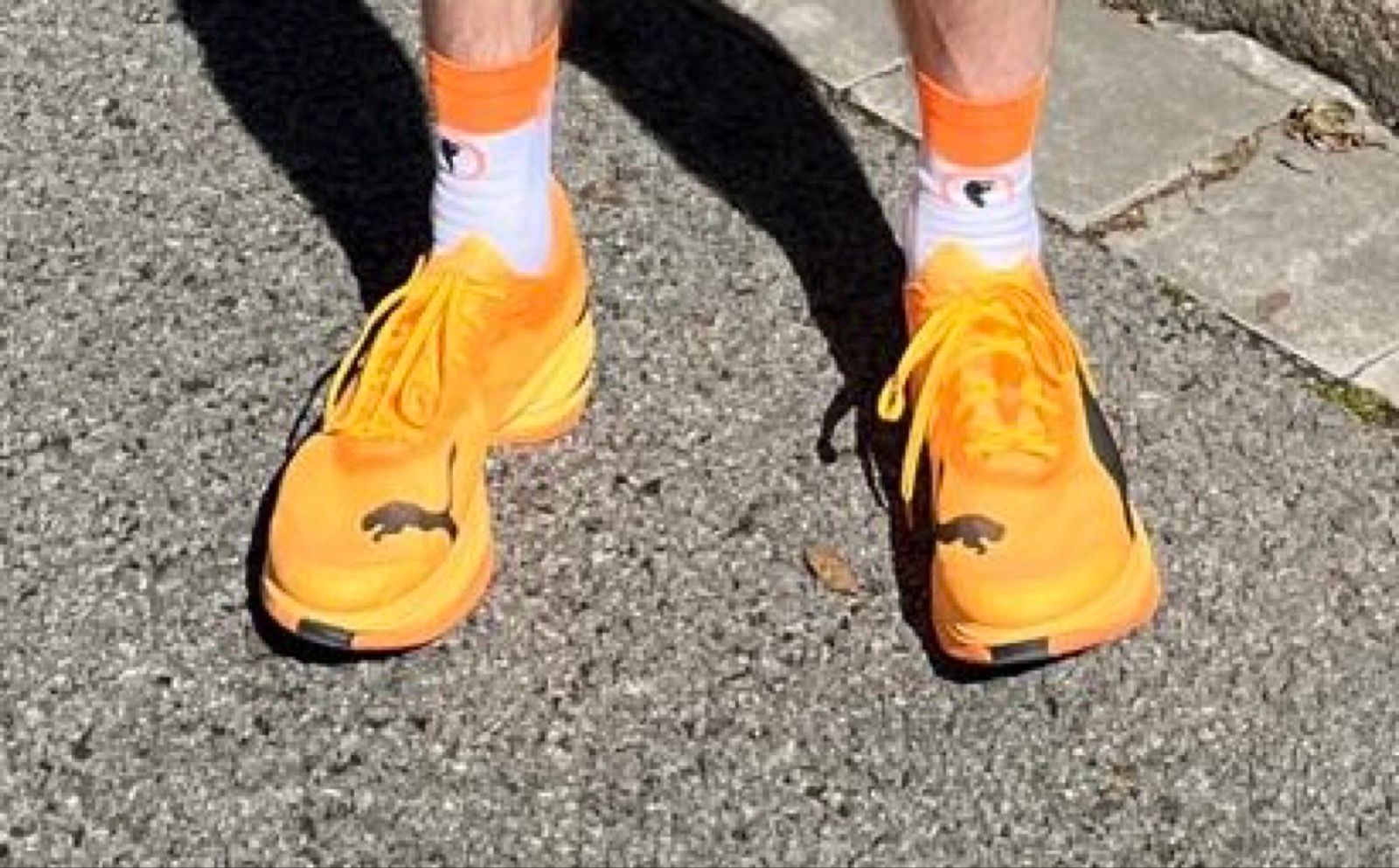
The trusty Puma Fast R’s didn’t let Barry down
Between them, they delivered two very different but equally compelling performances on one of Europe’s biggest marathon stages, and in doing so provided yet another reminder that Bournemouth AC athletes continue to thrive wherever they race.