
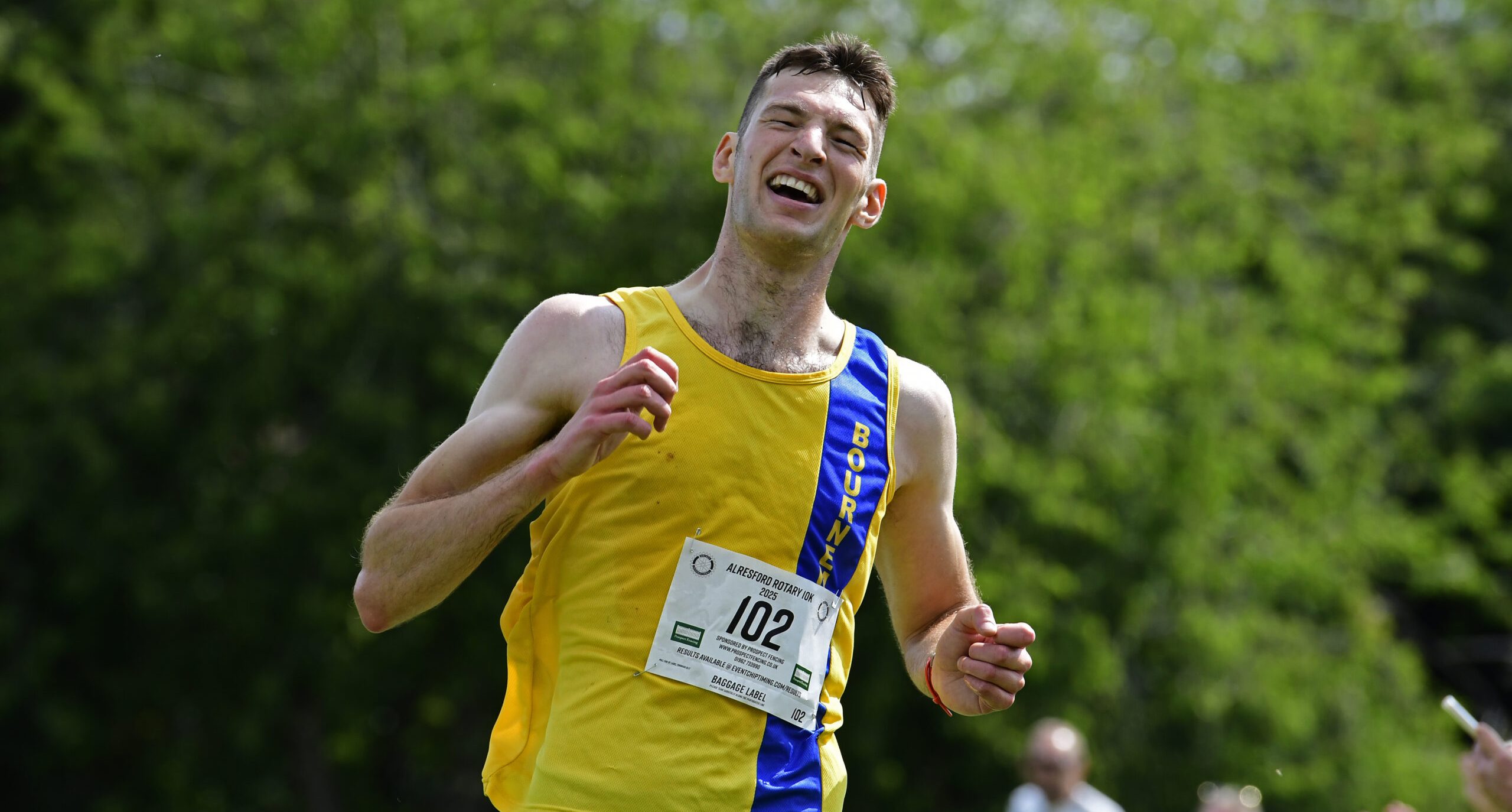
His training hadn’t gone according to plan but Ben Collins was hoping he could pull it out of the bag in the Boston Running Festival Marathon
There are times in marathon running when the result sheet tells only a fraction of the story. For Ben Collins at the Boston Running Festival Marathon, this was one of those days where the numbers – stark as they appear – barely scratch the surface of what unfolded.
Back in October, Ben had laid down a clear marker of his capabilities with a superb sub-2:40 performance at the Yorkshire Marathon. That run had been built on consistency, structure and a full training block executed to near perfection. Fast forward to the winter, however, and the script could not have been more different.
A back injury sustained on a pre-Christmas long run brought momentum to an abrupt halt. Forced away from running, Ben turned to cycling in an effort to maintain fitness, only for misfortune to strike again with a crash that compounded his physical setbacks. With options narrowing, he took to the Assault bike in the gym – a far cry from the roads and miles required for marathon preparation, but a necessary means of preserving some form of aerobic base.
When he did return to running, it was from the ground up. One mile at a time became two, then four, then eight by early February. A tentative first interval session followed – his first taste of speed work in months. Gradually, the long runs crept back: 17 miles by mid-February, then 20 by month’s end. Even then, progress was not linear, with another fall – this time involving a head injury – interrupting the fragile rebuild.
By March, with time running short, Ben managed to piece together a condensed but committed block, pushing mileage into the 80–90 mile range before tapering. It was, by any standard, a rushed preparation. The question heading into race day was simple: had enough been done?
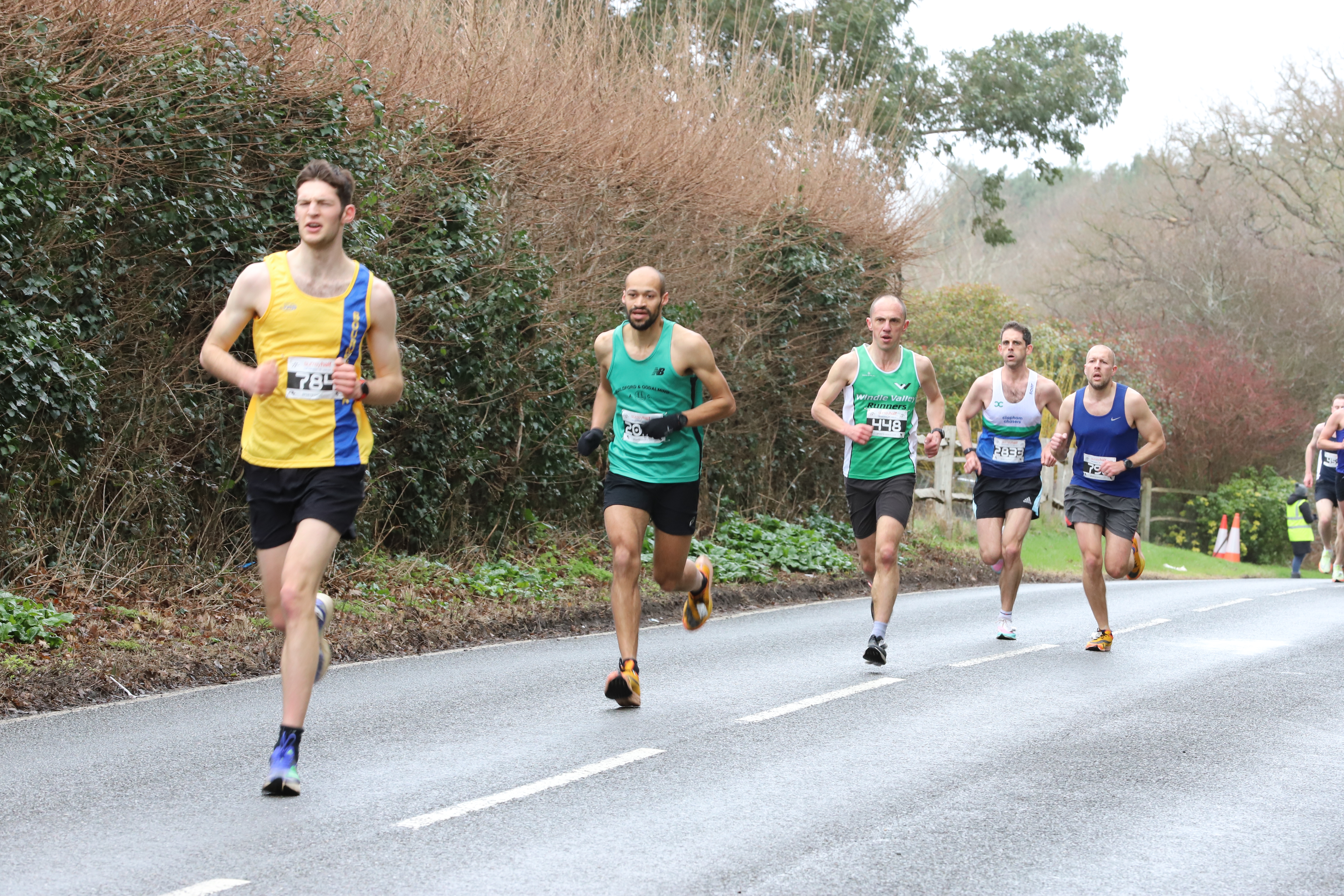
Big Ben is never afraid to start aggressive
The Boston Running Festival Marathon course offered a glimmer of hope. Flat and inherently fast, it presents opportunities when conditions allow. Unfortunately, the exposed nature of the route, so close to the east coast, left runners at the mercy of a stiff wind on the day.
Ben’s original ambition – a sub-2:38 and a Championship qualifying time for London – required boldness. And bold he was.
Setting off at a blistering 5:48 for the opening mile, he quickly settled into a rhythm just under six-minute pace. Through 10km in just under 37 minutes and 10 miles in 59:39, the early signs were promising. At halfway, reached in 1:19:43, the target still lingered within touching distance.
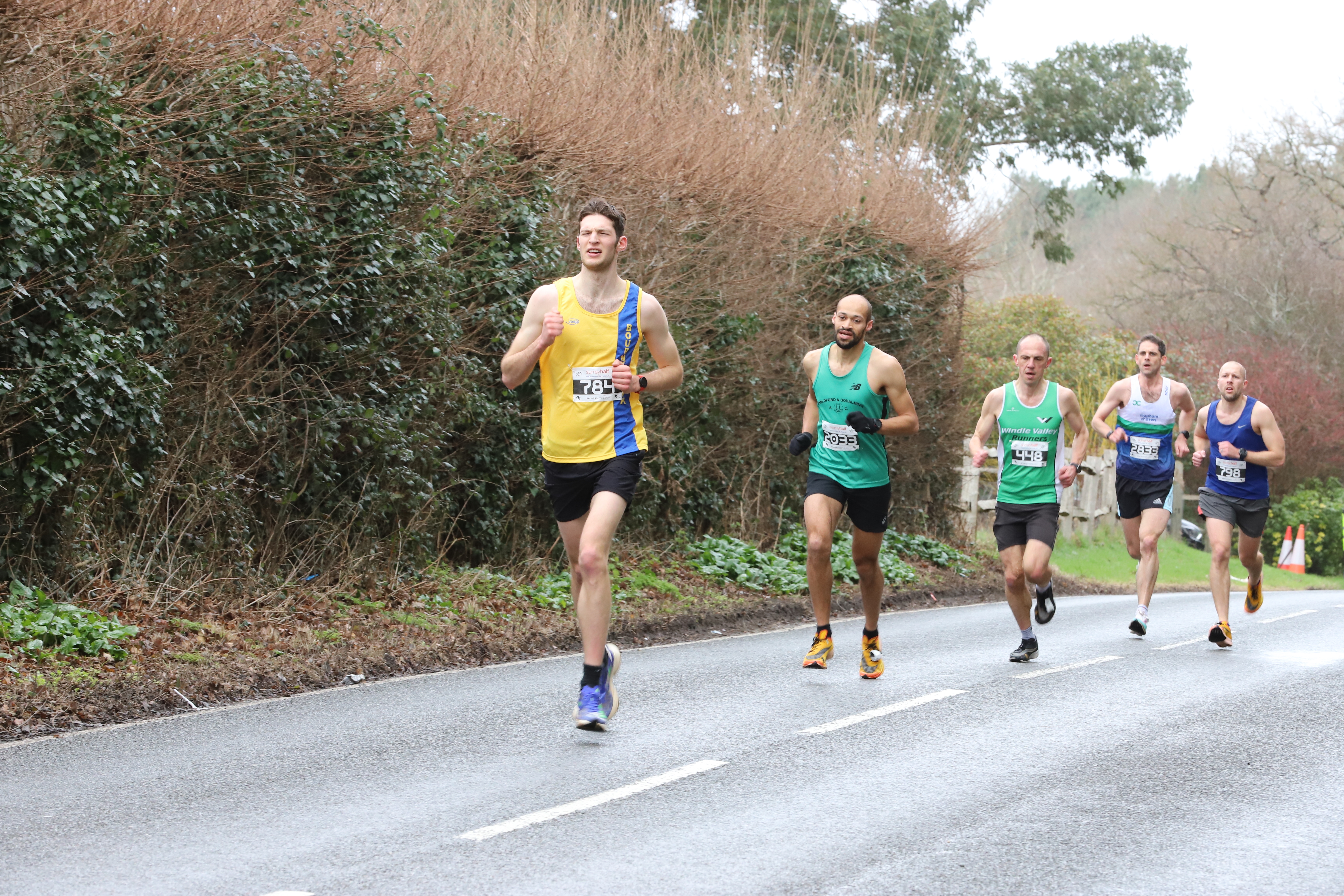
The going got tough once Ben turned into the forceful headwind
Then came the turn.
Into the wind, the race changed complexion entirely. What had felt controlled suddenly became a battle. The headwind hit hard, sapping energy and rhythm in equal measure. By 16 miles, the pace had drifted beyond seven minutes per mile, and the slide continued. The 19th mile ticked by at 7:45, the 21st at 8:45. The elastic had snapped.
The closing miles became an exercise in resolve rather than racing, with splits of 9:39 and 9:08 telling their own story. Ben crossed the line in 3 hours 3 minutes, finishing 125th overall – a result that, on paper, falls well short of expectations.
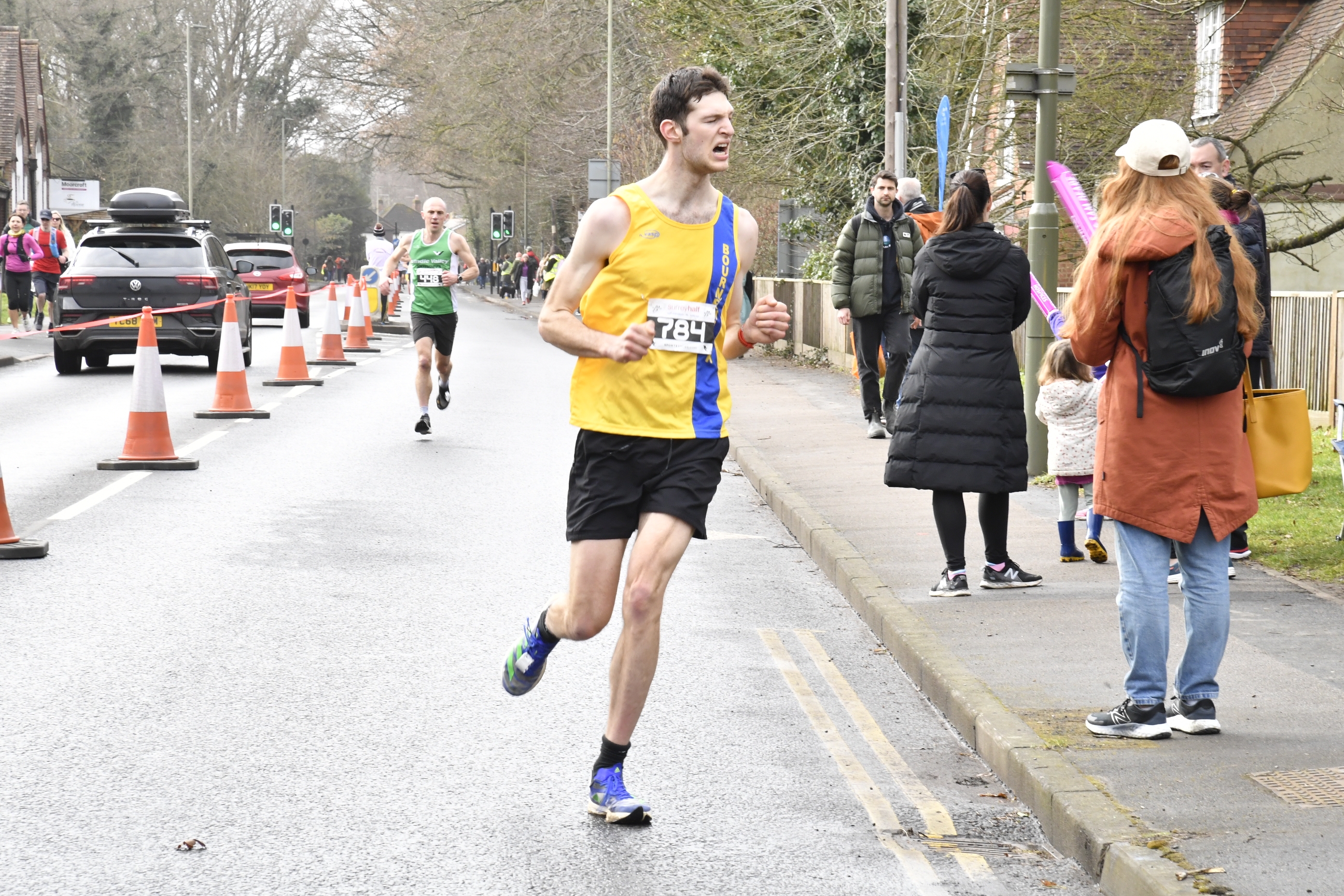
It was a tough outing for Ben and he blew up in the end
Yet this was a performance shaped as much by circumstance as by strategy. The decision to commit early was a calculated gamble, one that might have paid off on a different day, with a different build-up, or in calmer conditions. Instead, it served as a reminder of the marathon’s unforgiving nature.
At the front of the race, David Webster (Dundee Road Runners) claimed victory in 2:34:10, ahead of Mohamed Abdin (2:37:17) and Connor Culham (Braintree) in 2:37:22. In the women’s race, Lizzie Keep (Lewes) led the way with 2:54:22 (49th overall), followed by Katie Latham (2:55:42, 59th) and Elizabeth Joyce (2:56:05, 63rd).
For Ben, the day will sting. There’s no disguising that. But there are performances that build confidence, and others that build character. This was firmly the latter.
With a full, uninterrupted training block, there is little doubt that he will return stronger. The lessons learned here – about preparation, pacing and patience – will not be wasted.
The next chapter awaits in the autumn, and you suspect it won’t take long for redemption to arrive.